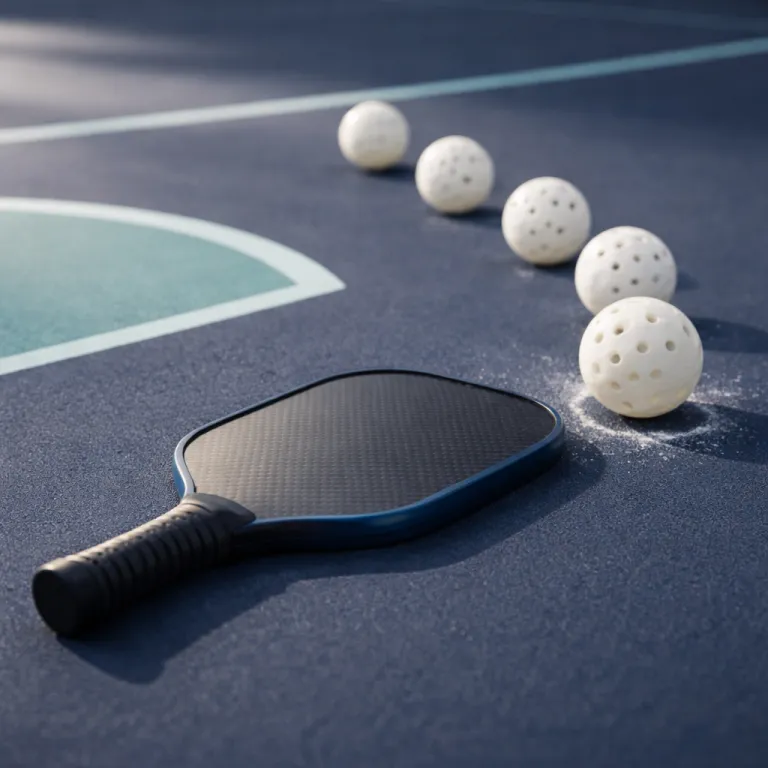
Why the slinky drill fixes real third shot drops
Most players can hit a pretty third shot drop when they stand still. Under real pickleball pressure, that same touch shot falls apart once they leave the baseline and enter the transition zone. The gap between practice and play closes when your third shot drill forces you to move, read the ball, and manage the kitchen steps all in one sequence.
The slinky-style third shot sequence does exactly that by stretching you from the start kitchen position all the way back to a full baseline hit. You and your partner dink at the kitchen, then you both take two kitchen steps back, hit two controlled drops into the non volley zone, and repeat until you reach baseline and must execute a true third shot under game like spacing. The court movement looks like a metal slinky walking down stairs, which is why this drill locks the pattern into your body rather than just your brain.
Run this drill on a public court at places like Eisenhower Park in Long Island or Pacific Beach Recreation Center in San Diego, where you can usually find a willing team to rotate in. Each player should focus on one clean shot at a time, not on winning the rally, because the goal is to make your drops work even when your legs and shoulder start to fatigue. In informal club surveys and coach anecdotes, players often report moving from roughly fifty percent to around seventy percent successful drops that land deep in the kitchen over a few weeks, as the ball begins to travel on a softer arc and gives you more time to follow it in without eating a drive at your feet.

Timed slinky drill: counts, targets, and real success metrics
To turn the slinky third shot pattern into a measurable routine, add a simple timer and clear targets. Set a countdown for sixty seconds, then start kitchen dinking with your partner and follow the classic pattern of two dinks at the kitchen, two kitchen steps back, two drops into the kitchen, and repeat until you reach baseline. Once you reach baseline, every baseline hit must be a controlled third shot drop that lands in the front half of the kitchen, not a lazy lob.
Use flat cones or tape lines at one metre intervals in the transition zone so you can see exactly how far your team has retreated. Your rule is that the ball will stay in play only if your shot drops into the non volley zone and could not be easily attacked above net height. That “could they have attacked it” check is the only metric that matters here, because pretty arcs mean nothing if a strong pro level opponent would crush that ball at your chest.
During the timed drill, your partner gives instant feedback after every hit by calling “attack” or “safe” based on whether they feel they could have driven the ball. Over sixty seconds you might hit fifteen to twenty third shot drops, and you should track how many of those drops kitchen landings were truly safe. A simple benchmark is to aim for at least twelve safe balls out of twenty attempts, then gradually raise that standard as your consistency improves and you build a personal record for this third shot drop drill.
Quick setup checklist
- Place cones or tape at one metre intervals from the kitchen line back to the baseline.
- Set a sixty second timer and agree on the “attack or safe” call with your partner.
- Start at the kitchen: play two dinks each, then both take two steps back.
- From each line, hit two controlled drops into the non volley zone before retreating again.
- At the baseline, hit only soft, arcing third shots that land in the front half of the kitchen.
- Record total attempts and total “safe” landings for both players after each round.
For easier tracking, you can sketch or print a simple table with columns for date, partner, cones reached, total drops, and safe results, plus a small court diagram showing the one metre markers.
Mechanics that hold up after thirty seconds of movement
The first thirty seconds of the slinky drill usually feel smooth, then the cracks appear. Shoulder fatigue creeps in, your feet stop finishing the kitchen steps, and your paddle angle drifts flatter so your shot drops start sailing long. That is the moment when this drill stops being about repetition and starts being about real match survival.
To keep your drops consistent, build the motion from your shoulder with a compact swing and a stable wrist, instead of flicking from the elbow or chasing spin with your hand. A soft continental grip on your paddle lets the ball bounce off the face with more control, and you can refine that grip by working through a dedicated guide on how to improve your pickleball grip for better performance. When you feel your arm tiring during the drill, shorten the backswing, bend your knees a little more, and let your legs lift the ball into its gentle drop pickleball arc.
Footwork is the other silent killer of a reliable third shot. As you follow the slinky pattern and time move backward, make sure every baseline hit starts with your body behind the ball so the ball will meet the centre of your paddle face. A useful cue is to land your outside foot first, then plant the inside foot as you swing, so your weight moves through the ball instead of falling away. If you let the ball get on top of you in the transition zone, even the best paddles or most expensive gear from any shop will not save that rushed hit from popping up into an easy attack.
Choosing between tennis style and table tennis style drops
Not every third shot drop should look the same, and the slinky drill gives you a safe lab to test different trajectories. Think of a tennis style drop as a slightly lower, faster shot with more forward spin, while a table tennis style drop floats higher with more loft and a softer bounce. Both shot types can be effective if you match them to your opponents’ kitchen habits and your own comfort in the transition zone.
When a pro style team crowds the net with aggressive hands and high ready paddles, a higher table tennis style drop pickleball arc that lands deep in the kitchen can force them to hit up. In the slinky drill, experiment by hitting third shot drops with extra loft whenever you see your partner’s paddle above net height, and notice how much more time you gain to follow the ball and close the gap. Against opponents who camp a little behind the line or fear the work kitchen grind, a firmer tennis style baseline hit with more spin can make your drops work by jamming their feet and forcing awkward half volleys.
During practice, call out “tennis” or “table” before each hit so your brain links the feel of the swing to the visual of the ball flight. Over time, your muscle memory will let you switch styles mid rally, especially once you have logged hours of dink pickleball patterns that lead naturally into different shot drops. Many teaching pros suggest tracking which style wins more points in practice games over at least fifty rallies, so you can see whether your default third shot drop should be the firmer tennis style or the softer table tennis style in real play.
Four week progression from 3.0 drops to 3.5 consistency
A structured month with the slinky drill can move a typical 3.0 weekend player toward 3.5 level reliability. In week one, run the pattern for three sets of sixty seconds focusing only on clean contact, soft hands, and getting every ball to land somewhere in the kitchen, without worrying yet about whether advanced players could attack it. Your only tracking metric is how many total third shot attempts you keep in play without clipping the net or sailing long.
Week two adds the “attack or safe” call from your partner, and you now count only the successful dinks and drops kitchen landings that would force an opponent to hit up. In week three, keep the same timed sets but tighten your target so that every drop pickleball trajectory must land in the front half of the non volley zone, which shrinks your margin and exposes any lazy hitting third habits. By this stage, you should feel more comfortable in the transition zone, because your feet and paddle now know how to move together instead of fighting each other.
Week four is where you stress test the skill under fatigue and light pressure. Play cooperative points where your team must execute a third shot drop from the baseline, then win the rally only after you have both reached the kitchen and played at least three successful dinks that make the ball bounce below net height. Players who log twelve to fifteen of these structured games over a month often report roughly a one level jump in confidence, learning that the real badge of progress is not the USAPA stamp on your paddle, but the tenth tournament game where your shot drops still land soft when your legs are gone.
FAQ
How often should I practice the slinky drill for my third shot drop ?
Most recreational players see progress when they run the slinky drill two or three times per week. Aim for three to four timed sets of sixty seconds, with short rests so your shoulder and legs feel mild fatigue. That level of repetition teaches your body to keep the ball low and soft even late in long games.
What paddle characteristics help with softer third shot drops ?
A mid weight paddle with a polymer honeycomb core and a textured composite face usually gives the best blend of touch and forgiveness for third shot work. Lighter paddles can feel quick at the kitchen but may flutter on a deep baseline hit, while very heavy paddles can tire your shoulder during long slinky drill sessions. Whatever you choose, prioritise a comfortable grip and a predictable sweet spot over flashy graphics or marketing claims.
How do I know if my third shot drop is actually effective ?
The cleanest test is whether a strong opponent could attack your drop above net height. If they are consistently forced to hit up from inside the kitchen or just behind the line, your shot is doing its job even if it does not look perfect. During practice, ask partners to call “attack” or “safe” on every ball so you get honest feedback instead of guessing.
Can I use the slinky drill when I practice alone ?
Solo players can adapt the slinky drill by hitting against a solid wall or backboard and marking distance zones with tape. Start close to the wall with soft dinks, then take two steps back and aim your drops at a low target line that represents the top of the net. You will not get live feedback, but you will still train the rhythm of moving from the baseline into the kitchen under control.
Should I always hit a third shot drop instead of driving the ball ?
No, the third shot drop is a powerful default, not a rule. When opponents leave big gaps, stand too far back, or struggle with low balls, a drive can be the smarter shot. The slinky drill simply ensures that when you do choose to drop, the ball lands soft enough to let you and your partner reach the kitchen safely.