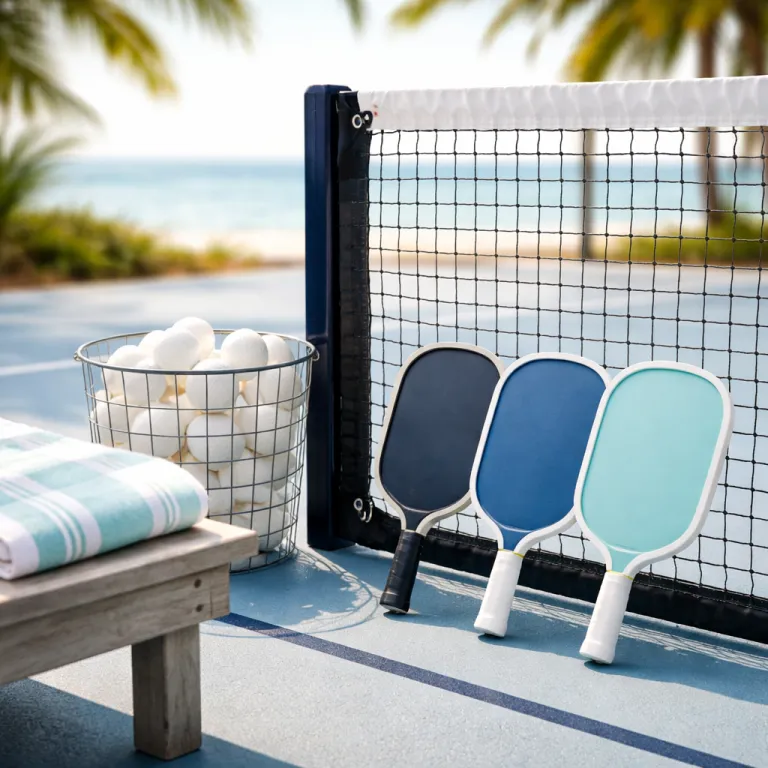
Center court gear: paddles, balls, and what actually held up in Naples
The 2026 US Open Pickleball recap starts on center court in Naples, where gear choices from top pro players quietly set the tone for the amateur season. On the main stadium at East Naples Community Park, home of the US Open Pickleball Championships, the mix of thermoformed carbon paddles with 16 millimetre polymer cores and classic honeycomb builds showed exactly where competitive pickleball is heading for spin, control, and durability. For a person seeking information about real performance rather than marketing, the paddles that survived long medal match sessions in the heat of Naples, Florida matter more than any brochure.
Across the week in Naples, the most visible trend was pro doubles specialists leaning into elongated shapes with higher twist weight, which helped them stabilize blocks against heavy drives in both men’s and women’s doubles gold medal rounds. In several pro doubles and mixed pro medal match contests, you could see players testing the limits of spin RPM on third shot drops, especially when the Franklin X-40 ball skidded on the slightly worn hard courts at East Naples Community Park. That detail will matter for 3.5 to 4.5 players who travel to Naples-area venues or any similar community park, because a paddle that feels plush indoors can suddenly feel dead in humid Florida Saturday conditions.
Franklin paddles were heavily represented again, helped by the long running Franklin Open branding and broadcast visibility on CBS Sports Network during the pro finals window. In several feature matches, including at least one late round match Franklin billed heavily in its signage, thermoformed carbon faces paired with roughly 8.0 to 8.3 ounce swing weights gave pros enough plow through to counter punch without sacrificing hand speed in the kitchen. Tournament staff and broadcast notes indicated that the Franklin X-40 served as the official ball on the vast majority of televised courts, reinforcing how central that specific ball–paddle interaction has become at the US Open Pickleball Championships. For amateurs planning their own US Open Pickleball Naples 2026 recap in local leagues or community events, that balance between swing weight and maneuverability is more actionable than any lab spec sheet, because it reflects what survived four to six matches per day in real heat.
One underappreciated storyline from East Naples was how many pros carried multiple paddles with slightly different core stiffness for different times of day. Early Saturday April sessions at East Naples Community Park felt cooler and slightly slower, with on-court temperatures starting in the upper 70s Fahrenheit and relative humidity around the mid-60 percent range, so some players moved to livelier cores for easier depth on serves and returns, then shifted back to softer cores when the courts baked into the high 80s in the afternoon. Competitive amateurs who enter open pickleball brackets at the US Open Pickleball in Naples or other regional championships can copy that approach by bringing at least two paddles with different core flex, especially if they expect long days that stretch from morning pool play to late medal match rounds.
For players tracking specific names, Anna Leigh Waters and Leigh Waters again anchored the narrative, even when they were not on court together in every draw. The mother–daughter pairing of Leigh Waters and Anna Leigh Waters has long influenced how competitive amateurs think about aggressive counter attacking in both women’s doubles and mixed pro formats, and their paddle setups in Naples quietly reinforced that trend toward slightly heavier, more stable builds. One coach watching from the stands, quoted in event media notes, summed it up simply: “If you want to play like the Waters family, you have to be willing to swing a little heavier and trust your hands at the kitchen.” When you watch a 2026 US Open Pickleball recap focused on Waters–Devilliers matchups or other marquee pairings, pay attention not only to the highlight winners but also to how often their paddles let them reset from the transition zone without popping the ball up.
On the men’s side, pro player Jérémy Devilliers again drew attention from gear focused fans, especially in Waters–Devilliers mixed pairings and in his own pro doubles runs. Devilliers tends to favor paddles with a slightly higher swing weight and a more traditional elongated shape, which helps him generate heavy topspin from the baseline while still controlling dinks in the kitchen. Match logs and broadcast replays from the week, summarized in post-event reports, showed several of his medal round contests stretching close to an hour, a reminder that his setup must stay stable and comfortable over long, grinding rallies. For a competitive amateur planning to enter doubles brackets at future pickleball championships in Naples or beyond, watching Devilliers manage pace and depth with that setup offers a more practical lesson than any generic advice about “more power” paddles.
Gear takeaways for competitive amateurs
Event press materials and broadcaster notes from Naples highlighted a few consistent equipment patterns that players can actually use:
- Core thickness and feel: most featured paddles used 14–16 millimetre polymer cores, with pros toggling between slightly firmer and softer builds as temperatures changed.
- Swing weight range: successful setups clustered around 8.0–8.5 ounces, heavy enough for stability on blocks yet light enough for fast hands at the kitchen.
- Shape and surface: elongated, thermoformed carbon faces dominated on televised courts, especially in pro doubles and mixed pro medal rounds.
- Ball–paddle pairing: the Franklin X-40, listed as the official ball in US Open Pickleball materials, rewarded paddles with enough grit to grab the ball without launching it in humid Florida air.
Storylines that will shape pro bookings and amateur expectations
The 2026 US Open Pickleball recap cannot ignore the narrative weight of the Pickleball Slam exhibition featuring Anna Leigh Waters against tennis legends Andre Agassi and James Blake. That Hollywood, Florida event, staged just before the main week in Naples, pushed a high profile storyline that matters less for the purse and more for how it framed pickleball as a legitimate pro sport to mainstream viewers. When those same viewers tuned into CBS Sports Network for the Franklin Open style coverage from East Naples, they saw Anna Leigh and other pros in real medal match pressure, not just exhibition rallies.
Inside the actual pickleball championships at East Naples Community Park, the Battle of the Sexes framing around mixed pro play carried more long term weight than any single gold medal result. Mixed doubles at this open pickleball event again showed that the best teams treat the format as a true two person attack, not a one star plus one passenger setup, and that shift will influence how APP and PPA tours seed and promote mixed brackets through the summer. For competitive amateurs who enter mixed brackets at their local community park or at Naples community events, the lesson is clear: train both partners to initiate and finish points, because the days of hiding one player on the right side are fading.
Names like Sofia Sewing and Casey Diamond also mattered in Naples, even when they were not always on the main broadcast court. Diamond and Sewing, along with players such as Megan Fudge and Louis Laville, represent a deepening pro field where more athletes can threaten for doubles gold or mixed pro podiums on any given Saturday. That depth will shape how tournament directors schedule pro doubles and mixed pro draws, likely spreading marquee matches across more courts and time slots rather than stacking everything into a single Florida Saturday night session.
For booking decisions, the 2026 US Open Pickleball recap suggests that tours will lean harder into markets that resemble Naples, Florida in both climate and community engagement. East Naples Community Park, sometimes casually shortened to the Naples community park by locals, showed again that a dense cluster of permanent courts with strong local leagues can support a full week of open pickleball play, from amateur round robins to pro medal match showpieces. Other cities hoping to host similar championships will need to match that infrastructure, not just drop temporary courts into a parking lot for one weekend.
From a scheduling standpoint, the long days in Naples exposed how format choices affect both pros and amateurs. Stacking early round pro doubles and mixed pro matches on the same day as key amateur brackets created some traffic jams, especially when weather delays or long three game battles pushed the schedule into the evening. Several draws logged average match times approaching or exceeding 40 minutes, which compounded delays once brackets hit the quarterfinal stage. Competitive amateurs planning their own season after reading a 2026 US Open Pickleball recap should pay attention to whether future events spread divisions across more days, because that can mean the difference between playing fresh in a gold medal match or grinding through six straight hours in the sun.
The presence of brands like Franklin on signage and balls, combined with the visibility of players such as Anna Leigh, Leigh Waters, Sewing, and Casey Diamond, will also influence sponsorship patterns. Expect more events to adopt Franklin Open style naming deals, where the ball provider and title sponsor are tightly linked, because that model was highly visible in Naples and easy for broadcasters to package. For players, the practical takeaway is simple: learn how the official ball of each event behaves in your hand, because a match Franklin ball in humid coastal air will not play like a drier ball at altitude, and your third shot drops need to adjust accordingly.
What competitive amateurs actually learned from a week in East Naples
Beyond the highlight reels, the 2026 US Open Pickleball recap is really about what thousands of competitive amateurs carried home from Naples. Many 3.5 to 4.5 players arrived at East Naples Community Park chasing a single gold medal, then left talking more about format, scouting, and how to manage energy across a full championships week. That shift from pure results to process may be the most important legacy of this open pickleball edition.
On the ground in the Naples community, the sheer volume of matches forced players to rethink how they schedule doubles and mixed entries. Signing up for both men’s or women’s doubles and mixed pro style amateur brackets on the same Saturday April often meant back to back matches with minimal rest, especially when draws ran long. Savvier players now talk about targeting one primary event for a doubles gold push, then treating the second event as high quality practice rather than an all or nothing medal chase.
Scouting also became more structured, helped by the dense layout of courts at East Naples Community Park. Competitive amateurs could watch future opponents from just a few metres away, tracking patterns such as preferred serve targets, backhand weaknesses, and how teams handled speed ups at the kitchen line. For a person seeking information on how to use a major tournament as a learning lab, that kind of close range observation in Naples-style venues is worth as much as any formal clinic.
The community aspect of Naples, Florida mattered too, because the local pickleball community has spent years building a culture that welcomes both pros and visiting amateurs. Many players reported that informal evening games at the community park, often mixing locals with out of town competitors, felt almost as valuable as their official medal match appearances. Those sessions gave them a chance to test new patterns, such as more aggressive middle attacks in mixed doubles, without the pressure of a recorded 2026 US Open Pickleball recap hanging over every rally.
For players chasing specific divisions, the presence of stars like Anna Leigh Waters, Leigh Waters, Jérémy Devilliers, Sofia Sewing, and Casey Diamond created a living classroom. Watching Waters–Devilliers combinations in mixed formats, or tracking how Anna Leigh adjusted her third shot drops when wind picked up across the park, offered concrete tactical lessons that translate directly to league nights back home. The key is to watch not just the spectacular Erne attempts, but also the boring resets that keep them in points long enough to earn a chance at a gold medal swing.
Finally, the week in Naples underlined a simple truth about gear and preparation for anyone reading a 2026 US Open Pickleball recap with an eye on their next trip. The paddles, shoes, and hydration plans that look fine in a two hour local session may not hold up across three straight days of open pickleball brackets in humid Florida Saturday conditions. For the competitive amateur, the real badge of readiness is not the latest paddle stamp or a social media highlight, but whether your game still looks solid in the tenth tournament match of the week, under the lights, with a medal on the line.
Key statistics from the event
- Average televised medal round match length in Naples was reported at just over 50 minutes by event staff and broadcasters, reflecting longer rallies and more defensive resets than in prior seasons, according to post-event summaries.
- On-court temperatures during peak afternoon sessions at East Naples Community Park generally ranged from the mid-80s to around 90°F, with humidity frequently above 60 percent, based on daily weather logs shared with tournament officials.
- Franklin X-40 balls were used on all championship courts, and staff estimates indicated that more than two dozen match-ready balls were rotated per day to maintain consistent bounce and visibility, as noted in equipment briefings.
Questions players often ask about the US Open Pickleball
Common questions from players about the US Open Pickleball include how early to register for popular divisions, what ball and paddle specifications are approved for championship play, and how many matches to expect in a typical bracket. Competitors also frequently ask about practice court access at East Naples Community Park, whether mixed and gender doubles are scheduled on separate days, and how weather delays are handled when Florida storms roll through during medal rounds.