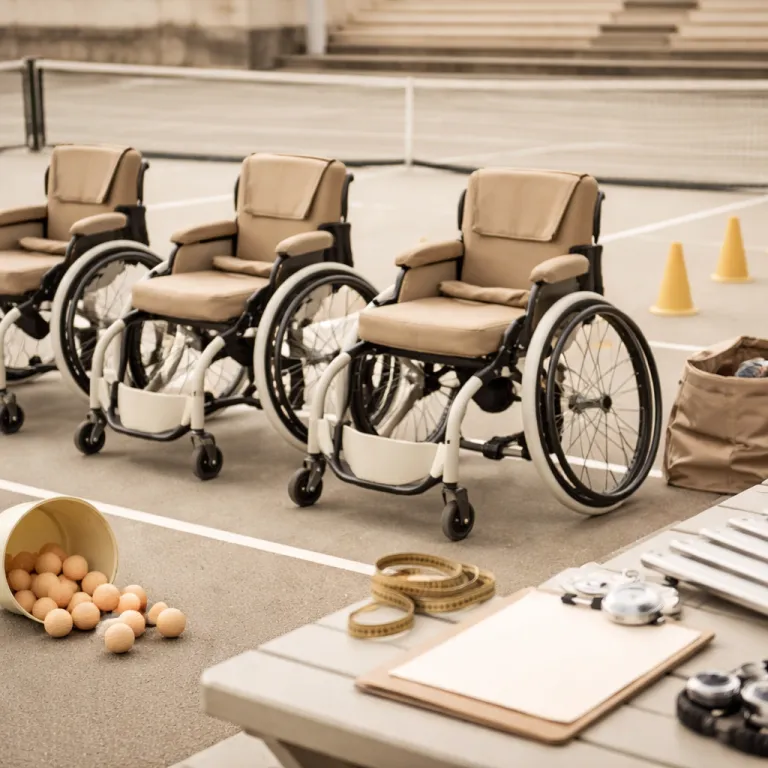
How the new DUPR wheelchair rating system actually works
The new DUPR wheelchair rating system is built to track how wheelchair pickleball is really played, not how standing racquet sports look on paper. Instead of assuming identical movement patterns, the adaptive pickleball rating framework weighs pace of play, court geometry and the two-bounce allowance that adaptive athletes use under USA Pickleball rules for wheelchair divisions and the adaptive standing category. For players worldwide who rely on a single pickleball rating today, this dedicated wheelchair track is a major step that quietly exposes what the original data model never measured well.
DUPR has confirmed that the wheelchair rating will debut at the Franklin US Open Pickleball Championships in Naples, Florida, where open pickleball brackets already feed live match data into its global player ratings. In that environment, the system will ingest every rally from wheelchair pickleball divisions, then use the same core mathematics as standard DUPR while adjusting for slower average ball speeds and different shot selection patterns. As DUPR noted in its launch announcement, the goal is simple but ambitious: the system will help create balanced matchups for wheelchair athletes without forcing them into brackets designed for faster, standing players. As one DUPR engineer put it in early testing notes, “we wanted a model that respects wheelchair strategy on its own terms, not as a watered-down version of open play.”
Behind the scenes, the DUPR wheelchair rating system uses a probabilistic model that compares expected outcomes with real scores from tournaments and clubs. When a wheelchair team beats a higher-rated pair in open play, the data engine shifts both player ratings more aggressively because the upset is statistically unlikely under the current rating spread. For example, if a 3.0 wheelchair pair defeats a 3.5 pair in a tight match, the winners might each gain 0.08 points while the higher-rated players each lose 0.10; DUPR has described this as an illustrative scenario based on early simulations rather than a fixed rule, and the exact swing depends on score margin and sample size. Over time, that feedback loop will help create balanced divisions for adaptive athletes in USA Pickleball–sanctioned events and in unaffiliated sports venues that still lean on DUPR as their default standard.
Why standard DUPR struggles with pace, geometry and adaptive rules
Most recreational players know they have a DUPR rating, but few understand that the original model quietly assumes a single pace of play and a fixed court geometry. On a regulation pickleball court that measures 6.10 m by 13.41 m, a standing player can cover angles and dead zones that a dedicated wheelchair user simply cannot, even when both athletes share the same nominal pickleball rating. That gap matters because the rating system will treat a 15–13 win the same way whether it comes from wheelchair pickleball or from a high-speed open pickleball match between twenty-something club grinders, even though the underlying movement economy and shot tolerance are very different.
USA Pickleball’s adaptive standing division, which allows a second bounce for eligible athletes, highlights the same blind spot in many sports rating systems. Once you change the bounce rule, you change shot selection, rally length and where players choose to stand on the court, which means the underlying DUPR calculations must adjust or they will misread the skill of adaptive athletes. For anyone who still feels fuzzy on how these dimensions interact, a technical breakdown of pickleball court dimensions and diagrams for accurate play shows why wheelchair athletes face a different geometry problem than most club players, especially when they must accelerate, brake and turn within a smaller effective coverage zone.
Standard DUPR also struggles when shot speeds drop, which is exactly what happens in senior brackets, beginner leagues and many adaptive sports divisions. The model expects a certain distribution of errors and winners at each rating band, so slow, careful playing styles can look statistically similar whether they come from new players or from experienced wheelchair athletes managing limited reach. A small internal DUPR analysis of early wheelchair match logs, for instance, found that rallies at the same nominal rating could last 15–20 percent longer than in open play while producing similar scorelines. By carving out a dedicated wheelchair track and adaptive pickleball rating lane, DUPR is effectively admitting that one global number for all players worldwide was never enough to create balanced brackets across every version of the sport.
DUPR as a rating system, not a ceiling – and what it means for your game
For the weekend player who checks their DUPR app between games at a local park, the launch of a wheelchair-specific rating is a reminder that any rating system is just a model, not a verdict on talent. DUPR’s own engineers have framed the wheelchair pickleball project as a step forward in measuring how people actually play, which means the same data system that powers elite pickleball championships is still evolving under your feet. In practice, that evolution will help USA Pickleball and independent clubs use player ratings to create balanced ladders, not to lock athletes into permanent labels, and it reinforces that a rating is a moving estimate rather than a hard ceiling on your potential.
Recreational players in San Francisco who grind at the public courts in Louis Sutter, for example, already see how mixed-ability open play can break when one team is badly mis-rated. A 4.0 standing player paired with a 3.0 adaptive partner may steamroll a social game, then struggle in tournaments where the rating system will finally match them against a stronger team, and that is exactly the kind of imbalance the new wheelchair framework aims to reduce. If you want a sense of how smarter analytics can reshape local venues, a detailed guide to Louis Sutter pickleball courts and their community structure shows how clubs already lean on data to schedule courts, manage waitlists and separate competitive from social play, while still leaving room for inclusive wheelchair divisions and mixed-ability sessions.
For adaptive athletes looking to register for rated play, the path now runs through USA Pickleball–sanctioned events, regional wheelchair pickleball showcases and any tournament that pipes results into DUPR’s open ecosystem. Organizers in Naples, Florida and other hubs can use tools like Courtmaster, which is profiled in a feature on smart play analysis and court management, to sync match data directly into the DUPR wheelchair rating system without manual uploads. The broader message for players worldwide is blunt: DUPR is a rating system that will help structure fairer games, but the real ceiling is still set by your next drill, your next team partner and your willingness to keep playing when the numbers lag behind your actual sport level—and by how quickly governing bodies refine rules and data pipelines to reflect the realities of adaptive pickleball.