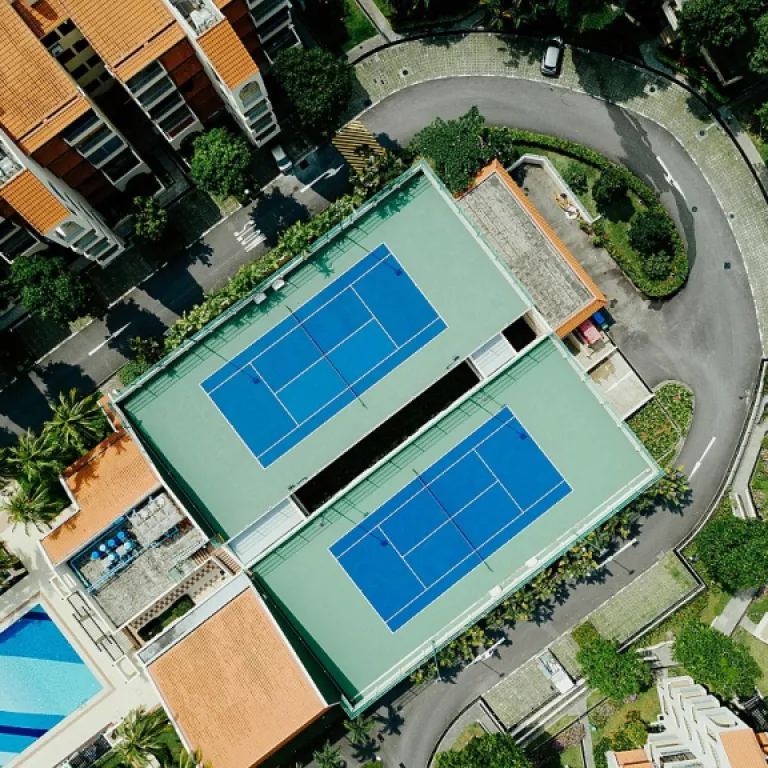
Key differences in court dimensions for pickleball and tennis
When people compare pickleball vs tennis court layouts, they usually start with size. A standard tennis court is 23.77 metres long and 8.23 metres wide for singles, while doubles tennis courts expand to 10.97 metres wide to accommodate extra players. By contrast, a standard pickleball court is 13.41 metres long and 6.10 metres wide, which means four pickleball courts can often fit on one full size tennis court.
These contrasting court dimensions shape how each sport feels and how players move. The smaller court size in pickleball reduces the distance in court feet that players must cover, yet the game still demands quick reactions and sharp positioning. Many facilities now paint pickleball courts as overlays on existing tennis courts, creating hybrid tennis pickleball venues that serve both communities efficiently.
For planning, managers must understand how many feet long and how many feet wide each layout requires. A tennis court needs a larger safety zone around the lines, while a pickleball court can operate in tighter spaces without compromising safety. This is why urban sports centres increasingly favour multiple pickleball courts where only one court tennis layout previously existed.
The net height also differs and affects the game tempo. Tennis players hit over a net that stands 0.91 metres at the centre, while pickleball players use a net that is slightly lower at 0.86 metres in the middle. These subtle differences in net height and court dimensions influence serve tactics, volley patterns, and overall rally length in both sports.
How layout and markings change the way players move
The markings on a pickleball court and a tennis court guide movement and strategy. In pickleball, the non volley zone, often called the kitchen, extends 2.13 metres from the net on each side and spans the full court width, creating a unique tactical strip. Tennis courts lack this specific volley zone, so tennis players can stand close to the net whenever they choose, especially in doubles formations.
Because the pickleball non volley zone restricts where players may volley the ball, it encourages softer dinks and patient rallies. This design makes playing pickleball less about raw power and more about touch, angles, and anticipation, particularly when four pickleball players contest intense doubles exchanges. In tennis, by contrast, the larger space and absence of a kitchen reward heavy topspin, deep groundstrokes, and aggressive net rushes.
Service boxes also differ between pickleball vs tennis court designs. A pickleball court divides into equal rectangles that are 6.10 metres long and 3.05 metres wide, while tennis service boxes are longer and narrower, changing how the serve is targeted. These contrasting shapes influence where players stand, how they recover, and how quickly they must react to the incoming ball.
Movement patterns therefore diverge significantly between the two sports. Tennis players often sprint along the baseline and cover long feet of lateral distance, whereas pickleball players take shorter, sharper steps within a compact area. This is one reason many older tennis players transition to play pickleball, as the smaller court reduces joint stress while preserving the thrill of fast rallies.
Net, equipment, and ball behaviour on different courts
The equipment used on a pickleball court and a tennis court further accentuates their differences. Tennis uses a felt covered ball that compresses on impact, interacts strongly with the strings, and bounces high on hard courts. Pickleball uses a perforated plastic ball that travels quickly through the air yet produces a lower, more predictable bounce on both indoor and outdoor pickleball courts.
Because the pickleball ball is lighter and less elastic, it loses speed faster after contact with the court surface. This characteristic encourages players to move forward and control the net, especially in doubles where four pickleball players crowd the non volley zone. In tennis, the livelier ball and larger court size reward deeper court positioning and heavy topspin that pushes opponents behind the baseline.
The net systems also reflect each sport’s priorities. Permanent tennis courts usually feature a central strap and sturdy posts, while many new pickleball courts rely on portable nets that can be moved between multi use courts. Facilities converting a tennis court into several pickleball courts must ensure each pickleball net is correctly tensioned and exactly 0.86 metres high at the centre.
These technical details matter for fairness and safety. Incorrect net height can distort the game, making serves either too easy or unrealistically difficult for players at different skill levels. When venues host both tennis and pickleball tennis events, staff must regularly verify net height, court dimensions, and line visibility to maintain consistent playing standards.
Accessibility, skill levels, and community appeal
One of the strongest arguments in the pickleball vs tennis court debate concerns accessibility. The smaller court size and slower moving ball make playing pickleball approachable for beginners, children, and older adults. Many tennis players who once found full size tennis courts demanding now enjoy the shorter sprints and gentler impact of the pickleball sport.
Because rallies unfold over fewer court feet, new players can experience success quickly. They learn to serve underhand, control the ball within the non volley zone, and participate in doubles games without needing elite fitness. This inclusive design has helped build a vibrant community around pickleball courts, where mixed ages and varied skill levels often share the same session.
Tennis remains a foundational sport with deep traditions and a global competitive structure. However, the time and physical commitment required to master a full tennis court can be a barrier for some recreational players. By contrast, many people feel comfortable to play pickleball after only a few introductory sessions, especially when guided by experienced pickleball players who explain court dimensions and basic tactics.
Community planners increasingly weigh these factors when allocating space between tennis courts and pickleball courts. A single court tennis layout may serve four tennis players at once, while the same footprint reconfigured into four pickleball courts can host up to sixteen players in doubles. This higher participation density strengthens social ties, increases sports club revenue, and justifies investment in dedicated court pickleball facilities.
Converting tennis courts to pickleball courts in practice
As demand for pickleball grows, many venues explore converting existing tennis courts into multi use spaces. The typical approach overlays several pickleball courts onto one tennis court, using contrasting colours to distinguish lines clearly. Operators must calculate how many feet long and feet wide each pickleball court will be, ensuring safe run off areas between adjacent courts.
Accurate planning of court dimensions is essential to avoid cramped layouts. Each pickleball court should remain 6.10 metres wide and 13.41 metres long, with at least 1.5 to 2.0 metres of clearance at baselines and sidelines. When four courts share one tennis court, careful staggering of nets and non volley zone lines helps reduce visual confusion for players.
Facility managers also need to consider noise, lighting, and scheduling. The distinctive sound of the plastic ball on paddles can be louder than a tennis ball on strings, especially when many pickleball courts operate simultaneously. Some venues therefore group tennis pickleball activities at specific times, balancing the needs of tennis players who prefer quieter sessions on traditional tennis courts.
For a detailed look at how technology supports these transitions, many professionals study smart court projects such as advanced pickleball court analytics and equipment management. These initiatives track how players move across court feet, how often they approach the volley zone, and how different skill levels use space. Insights from such systems guide future investments in court tennis conversions and new pickleball facilities.
Strategy, scoring, and style of play on each court
The contrasting layouts of a pickleball court and a tennis court shape strategy and scoring. In pickleball, games are typically played to 11 points, with only the serving side able to score, which encourages careful shot selection. Tennis uses a more complex scoring system with games, sets, and tiebreaks, rewarding sustained concentration over longer periods.
On a pickleball court, the serve must be underhand and land diagonally beyond the non volley zone, which reduces the dominance of power serving. Players then often advance toward the volley zone, where quick exchanges decide many points, especially in doubles. In tennis, overhand serves can exceed high speeds, and aggressive first serves frequently produce immediate advantages for skilled tennis players.
The smaller court size in pickleball compresses time and space, making reflexes and soft hands crucial. Many rallies involve dinking the ball just over the net, probing for openings while respecting the non volley zone rules. On a tennis court, by contrast, baseline exchanges can cover many long feet, with heavy topspin and deep drives pushing opponents far behind the baseline.
These stylistic differences influence which sport individuals choose at different life stages. Younger athletes may gravitate toward the explosive movement and full body demands of tennis, while older adults or injured players often find renewed joy in playing pickleball. Both sports, however, offer rich tactical depth, strong community bonds, and lifelong opportunities to stay active on well maintained courts.
Planning the right mix of pickleball and tennis facilities
Urban planners, club managers, and schools increasingly face decisions about balancing pickleball vs tennis court investments. They must evaluate participation trends, age profiles, and available land measured in court feet before committing to new builds or conversions. Because four pickleball courts can fit within the footprint of one tennis court, the potential for higher participation per square metre is significant.
When planning, decision makers should map current and projected demand for both sports. Areas with strong junior tennis programmes may prioritise maintaining several full size tennis courts, while communities with ageing populations might emphasise additional pickleball courts. Flexible designs that allow temporary pickleball lines on a court tennis surface can bridge transitions while long term preferences become clearer.
Maintenance costs and scheduling also influence the optimal mix. Hard surface tennis courts and pickleball courts require regular cleaning, crack repair, and line repainting, but the higher player throughput on pickleball courts can improve financial returns. Clubs that offer both sports often schedule peak time doubles sessions, enabling many players to share limited court dimensions efficiently.
Ultimately, the goal is to support inclusive, sustainable sports ecosystems. By understanding how court size, net height, and ball behaviour affect different skill levels, planners can create environments where both pickleball players and tennis players thrive. Thoughtful design of court pickleball and court tennis spaces ensures that future generations enjoy varied, engaging sports options within their local community.
Common questions about pickleball vs tennis court layouts
How many pickleball courts fit on one tennis court ?
In most cases, facilities can fit up to four standard pickleball courts within the footprint of one full size tennis court. This assumes each pickleball court remains 13.41 metres long and 6.10 metres wide, with modest safety space between courts. Exact numbers depend on available run off areas and local safety regulations.
Is pickleball easier to learn than tennis for beginners ?
Many beginners find pickleball easier to learn than tennis because the court is smaller and the underhand serve is less technical. Players can rally successfully after only a short introduction to rules and basic strokes. However, both sports offer deep tactical complexity at higher skill levels.
Can the same court be used for both tennis and pickleball ?
Yes, many venues now use multi purpose courts that support both tennis and pickleball. They typically keep the original tennis court lines and add contrasting pickleball court markings plus portable nets. Clear colour coding and good signage help players distinguish which lines apply to each sport.
Does pickleball put less strain on the body than tennis ?
For many recreational players, pickleball places less strain on joints because the court is smaller and movements cover fewer long feet. The lighter ball and shorter rallies can be easier on knees, hips, and shoulders. Individual experiences vary, so players should still warm up properly and respect personal limits.
What surface works best for pickleball courts ?
Most outdoor pickleball courts use acrylic coated hard surfaces similar to tennis courts, which provide consistent bounce for the plastic ball. Indoors, wood or synthetic gym floors are common, often with portable nets and taped lines. The key is a level, non slippery surface that maintains predictable ball behaviour and safe footing.
Trusted references : International Tennis Federation (ITF) ; USA Pickleball Rulebook ; International Federation of Pickleball (IFP).