Basic court layout and equipment
Pickleball Court Dimensions and Key Zones
To play pickleball, understanding the court layout is essential. The standard pickleball court measures 20 feet wide by 44 feet long, the same size for singles and doubles play. The court is divided into two equal sides by a net that stands 36 inches high at the sidelines and 34 inches at the center. Each side features a right and left service area, separated by a centerline, and a unique area called the non-volley zone, often referred to as the "kitchen." This zone extends 7 feet from the net on both sides and plays a crucial role in the rules of volley and ball play. For a deeper dive into the kitchen rule and its impact on your game, check out this guide to the kitchen rule in pickleball.
Essential Equipment for Every Player
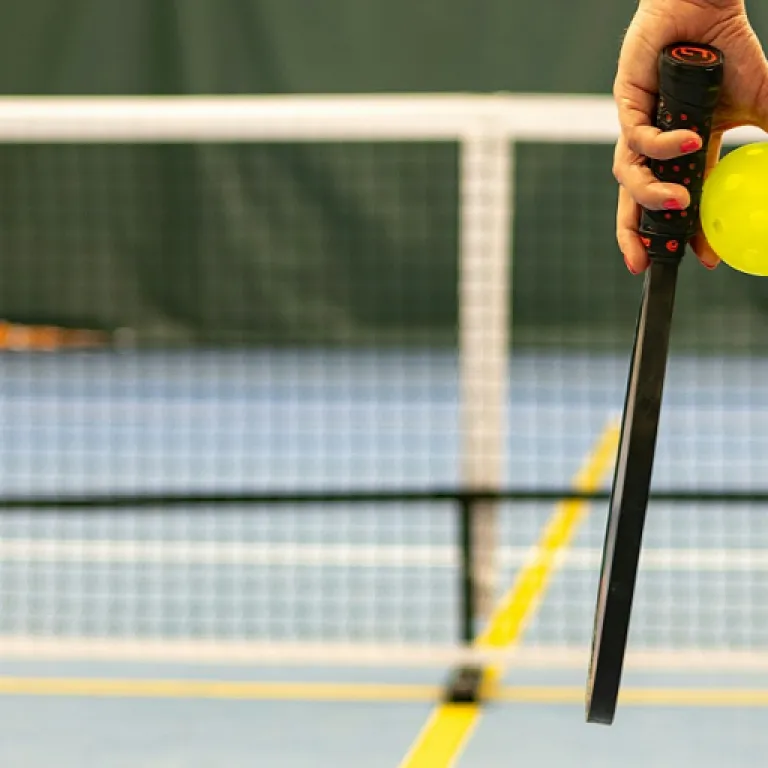
Pickleball requires a few key pieces of equipment. Each player needs a paddle, which is smaller than a tennis racquet but larger than a ping-pong paddle. The ball used is lightweight and perforated, resembling a wiffle ball. Proper court shoes are recommended to ensure safety and agility during play. The net, as mentioned, is slightly lower in the middle, which influences how the ball bounces and how players approach volleys and serves.
- Paddle: Designed for control and quick response during rallies and volleys.
- Ball: Plastic, with holes, optimized for consistent bounce and flight.
- Net: 36 inches high at the posts, 34 inches at the center.
- Court shoes: Non-marking soles for grip and support on the court surface.
Understanding the Zones and Their Impact on Play
The court is marked with several important lines: baselines, sidelines, centerlines, and the non-volley zone line. The non-volley zone (kitchen) is especially important because it restricts where players can volley the ball. Mastering the court layout helps players anticipate ball bounces, position themselves for serves, and avoid faults during play. Knowing where you are on the court can make a big difference in your team’s opportunity to win points and follow the official pickleball rules set by USA Pickleball.
Serving rules and how to start a game
Starting the Pickleball Game: Serving and Sequence
To begin a pickleball game, the serve is crucial. The serving team stands behind the baseline, making sure both feet are behind the line when they hit the ball. The server must hit the ball underhand, contacting it below the waist. The serve must travel diagonally across the court, landing in the opponent’s service area, beyond the non-volley zone (also called the kitchen).
- The ball must clear the net and not touch the kitchen on the serve.
- Only one serve attempt is allowed, except if the ball touches the net and lands in the correct service court (a let serve), in which case the serve is replayed.
- The server continues serving until their team commits a fault.
Understanding the Double Bounce Rule
After the serve, both teams must let the ball bounce once on their side before hitting it. This is known as the double bounce rule. The receiving team lets the served ball bounce, then returns it. The serving team must also let the return bounce before playing it. After these two bounces, players can volley the ball (hit it in the air) as long as they are not standing in the non-volley zone.
Service Sequence and Team Play
In doubles play, both players on the serving team have a chance to serve and score points, except at the start of the game when only one player serves. When a fault occurs, the serve passes to the partner. If both partners commit faults, the serve goes to the opposing team. The server’s position alternates between the right and left side of the court after each point scored, ensuring both players serve from both sides.
- Always announce the score before serving, stating the serving team’s score first, then the receiving team’s score, and finally the server number (1 or 2).
- Players must serve from the correct side of the court, based on their team’s score (even scores from the right, odd from the left).
For a deeper dive into the pickleball scoring system, check out this helpful guide.
Scoring system explained
How Points Are Scored in a Pickleball Game
Understanding how to score in pickleball is essential for every player. The scoring system is simple, but there are a few unique rules that set pickleball apart from other racquet sports. Points can only be won by the serving team, and the game is typically played to 11 points, though some games may go to 15 or 21 depending on the format. A team must win by at least two points.
- Only the serving team can score points. If the receiving team wins a rally, they do not score a point but instead gain the opportunity to serve.
- Service sequence matters. In doubles, both players on a team have a chance to serve before the serve passes to the opponents, except at the very start of the game.
- Announcing the score: The server must call out the score before each serve, stating their team’s score first, then the opponents’, and finally the server number (either 1 or 2 in doubles).
What Happens After a Fault?
Faults can occur in several ways, such as hitting the ball out of bounds, failing to clear the net, or volleying in the non-volley zone (also called the kitchen). When a fault is made by the serving team, the serve passes to the next server or to the opposing team, depending on the situation. No points are awarded to the receiving team for faults; they simply gain the serve.
Keeping Track of the Score and Court Sides
Players switch sides of the court after each game, and sometimes during the game if a certain point threshold is reached. This helps ensure fair play by balancing any advantages related to court conditions. For those new to the sport, using a score sheet or a scoreboard can help keep track of the game’s progress and avoid confusion during play.
For a deeper dive into setting up your court and ensuring you’re ready to play pickleball by the official rules, check out this guide on how to choose and set up a portable pickleball court for your game.
Faults and violations to avoid
Common Mistakes That Lead to Faults
Understanding faults is essential for anyone looking to play pickleball and improve their game. A fault is any action that stops play because it violates the official pickleball rules. Knowing these can help your team avoid losing points and keep the game fair and enjoyable.
- Serving faults: If the server steps on or over the baseline while serving, or if the pickleball serve lands outside the correct service area, it’s a fault. The serve must be made underhand, and the ball must be hit below the waist.
- Volley faults: Hitting the ball before it bounces on each side during the first two shots of a rally breaks the double bounce rule. Both the serving team and the receiving team must let the ball bounce once before volleying.
- Non-volley zone (kitchen) violations: Players cannot volley the ball while standing in the kitchen or touching the kitchen line. If a player volleys and their momentum carries them into the kitchen, it’s a fault.
- Ball bounce errors: If the ball bounces twice on one side before being returned, the point goes to the other team.
- Out-of-bounds: Hitting the ball outside the court lines or into the net results in a fault. Always aim to keep the ball in play on your opponent’s side court.
How Faults Affect the Game and Scoring
Faults have a direct impact on the score and the flow of the pickleball game. When the serving team commits a fault, the serve passes to the next server or to the other team, depending on the service sequence. Only the serving team can win points, so avoiding faults is key to maintaining your team’s opportunity to score.
For example, if a player hits the ball into the net or steps into the volley zone during a volley, the serve side changes. This keeps the game moving and ensures both teams have a fair chance to play pickleball and win points.
Tips to Avoid Faults and Play Fair
- Always check your position on the court, especially near the kitchen and baseline.
- Follow the bounce rule after the serve to avoid early volleys.
- Communicate with your partner to cover the hand court and avoid confusion during fast rallies.
- Practice your serve pickleball technique to reduce serving faults and maximize your team’s scoring chances.
Staying aware of these rules and common mistakes will help you play by the official USA Pickleball guidelines and enjoy a smooth, competitive match.
The non-volley zone (kitchen)
What is the Kitchen and Why Does it Matter?
The non-volley zone, often called the "kitchen," is a crucial part of the pickleball court. This area extends 7 feet from the net on both sides and runs the width of the court. The main rule here is simple: players cannot volley the ball (hit it out of the air) while standing inside this zone. This rule is designed to prevent aggressive net play and keep the game fair for both teams.
Key Rules for Playing Near the Kitchen
- No Volleying in the Kitchen: If you hit the ball before it bounces (a volley) and any part of your body or paddle touches the kitchen or its line, it is a fault. This applies to both singles and doubles play.
- Entering the Kitchen: You can step into the kitchen at any time, but you must wait for the ball to bounce before hitting it. After the ball bounces, you can hit it from inside the zone.
- Momentum Rule: If you volley the ball outside the kitchen but your momentum carries you into the zone, it still counts as a fault. Be careful not to step forward after a volley.
- Serving and the Kitchen: The serve must clear the kitchen and land in the correct service box on the opposite side. If the serve lands in the kitchen or on its line, it is a fault and the serve goes to the next server or team.
Common Mistakes and How to Avoid Them
- Many beginners accidentally step on the kitchen line during a volley. Always be aware of your foot placement, especially when moving forward to attack a short ball.
- Remember, the kitchen rules apply to both the serving team and the receiving team. Everyone must respect the non-volley zone during play.
- Practice the bounce rule: let the ball bounce before entering the kitchen to hit it. This helps you avoid faults and keeps the game within official pickleball rules.
Why the Kitchen Rule Improves the Game
The kitchen rule encourages longer rallies and strategic play. Teams must use placement and patience rather than just power. This makes pickleball enjoyable for all skill levels and ensures fair opportunities to win points, regardless of which side of the court you play on. Understanding and respecting the non-volley zone is key to improving your pickleball game and following the official rules set by USA Pickleball.
Strategies for fair and enjoyable play
Tips for Respectful and Effective Team Play
- Communicate with your partner: Clear calls like "mine" or "yours" help avoid confusion, especially when the ball lands near the center line or close to the kitchen. Good communication ensures both players know who will hit the ball and helps prevent faults.
- Rotate positions strategically: After each side out, switch serve sides and adjust your court coverage. This keeps your team balanced and ready for the next serve or volley. Remember, the serving team must follow the correct service sequence to avoid losing points.
- Respect the non-volley zone: The kitchen is a unique area where volleys are not allowed. Always let the ball bounce before hitting it in this zone. Stepping into the kitchen during a volley is a common fault, so be mindful of your footwork.
- Follow the bounce rule: At the start of each pickleball game, both teams must let the ball bounce once on each side before volleys are allowed. This rule encourages longer rallies and fair play.
- Encourage fair play and sportsmanship: Adhering to official pickleball rules, such as those set by USA Pickleball, helps maintain a positive atmosphere. Respect your opponents, call faults honestly, and congratulate good shots.
Maximizing Your Team’s Opportunities
- Target open spaces: Aim your shots toward the side court or areas where your opponents are not positioned. This increases your team’s chance to win points and keeps your opponents on the move.
- Use soft shots and dinks: A soft hit ball that lands in the kitchen can force your opponents to move forward and make difficult returns. Mixing up your shots between volleys, drives, and dinks keeps your play unpredictable.
- Stay alert for faults: Watch for common violations, like serving from the wrong side or hitting the ball before it bounces in the non-volley zone. Knowing these rules helps your team avoid unnecessary point losses.
- Practice consistent serving: A strong, legal pickleball serve sets the tone for each rally. Focus on accuracy and follow the correct service sequence to give your team the best start each time you serve pickleball.
By focusing on teamwork, understanding the court layout, and following the official pickleball rules, you can enjoy a fair and competitive pickleball game. Whether you are the server or returning team, these strategies help everyone play pickleball with respect and skill.