Summary
Editor's rating
Is it worth the money?
Design and feel in the hand
Comfort, grip, and fatigue over longer sessions
Carbon fiber, honeycomb core, and what that feels like
Build quality and how it holds up
On-court performance: power, control, and spin
What you actually get in the box
Pros
- Good spin and control for the price thanks to the textured carbon fiber face
- 16 mm honeycomb core and thermoformed build feel solid and reasonably forgiving
- Nice bundle with cover, overgrip, and eraser adds real value
Cons
- Slightly head-heavy balance may feel tiring or sluggish for some players
- Stock grip is thin and basic, basically requires using an overgrip
- Not as soft or finely tuned in feel as higher-end paddles from big brands

Specifications
View full product page →| Brand | PADDEX |
A budget-friendly “proper” paddle, not a toy
I’ve been playing pickleball a few nights a week for a while now, mostly with cheaper composite paddles and whatever the club has lying around. I picked up this PADDEX carbon fiber paddle because I wanted to see if a sub-£60 "serious" paddle was actually worth it, or just marketing noise. I’ve used it for mixed doubles and a couple of round-robins, swapping back and forth with my usual paddle to really feel the differences.
The very short version: this is a pretty solid step up from entry-level paddles, especially if you’ve only used smooth-faced, cheap fiberglass or wooden bats before. It’s not on the same level as high-end brands that cost double, but it’s also nowhere near toy territory. You actually feel the spin and the firmer, more controlled contact.
I played with it for about two weeks in total, including a couple of long sessions of 2–3 hours. I also let a few club mates try it, including one guy who plays with a Ronbus R3.16, to see if I was imagining the differences. Feedback was fairly consistent: good spin, good pop, slightly head-heavy feel, and very decent value for the price. Nobody found it unplayable or bad, but nobody said it beats their £150+ paddle either.
So if you’re wondering whether this thing is legit or just Amazon noise from an unknown brand: it’s legit enough. It’s not perfect, and there are a few details I’d tweak, but for an intermediate or ambitious beginner on a budget, it gets the job done and then some. Let’s break it down a bit more clearly.
Is it worth the money?
Price-wise, this sits in that middle tier: not a bargain-basement starter set, but well below the big-name pro paddles. For under £60, you’re getting a real carbon fiber face, a 16 mm core, thermoformed build, and a small kit (cover, overgrip, eraser). Compared to what I’ve seen and used, that’s good value for someone moving past the beginner stage. It’s basically giving you 70–80% of what pricier paddles offer, at about half the cost.
There are definitely cheaper paddles on Amazon, but most of those come with smoother faces, thinner cores, or just feel dead in the hand. You’ll save money upfront, but you’ll probably want to upgrade sooner. On the other side, if you’re already playing tournaments regularly and obsessing over touch and feel, you might be happier jumping straight to a Ronbus, Joola, Selkirk, etc. Those paddles do feel a bit more dialed-in and consistent, but you’re also paying roughly double.
Where this PADDEX makes sense is for players who are:
- Past the pure beginner stage and playing regularly
- Wanting to feel more spin and control than a basic paddle gives
- Not ready to spend £120+ on a big-name brand
It’s not perfect – the balance might bug some people, and the grip basically needs that overgrip – but nothing here feels like a rip-off. If you’re budget-conscious and want something that actually plays like a modern carbon paddle, this is a sensible choice. If you’re already chasing tiny performance gains and don’t mind spending more, you’ll probably skip this and go straight to the more expensive brands.
Design and feel in the hand
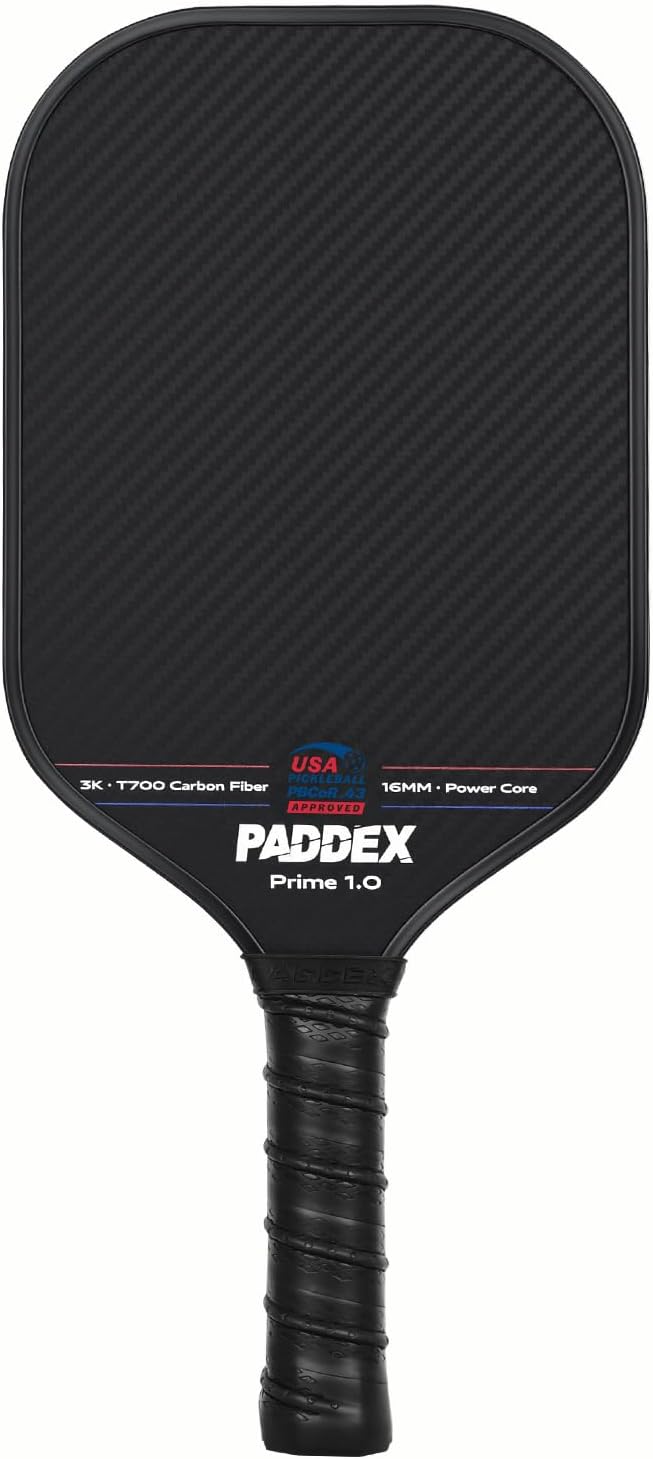
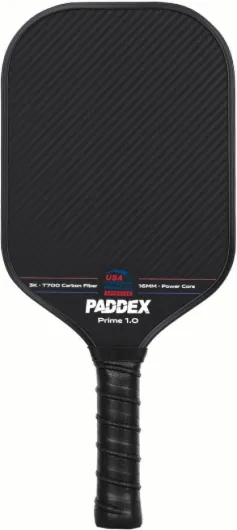
Design-wise, this paddle is pretty straightforward: elongated shape, carbon look, black everything. No wild colors or big logos. If you like simple, this is fine. If you want your paddle to stand out visually, this one is a bit boring. Personally, I kind of like that it just looks like a tool, not a toy. The edges are clean, and the thermoformed construction means the whole frame feels like one solid piece rather than a face glued onto a core.
In the hand, the first thing I noticed was the balance. The weight is listed around 8 oz, which is standard, but it feels slightly more head-heavy compared to a couple of other paddles I own. One reviewer mentioned it balances about 1 cm closer to the handle than a Ronbus but still feels top heavy, and I’d agree it’s on the head-heavy side. That gives you a bit more power on drives and serves, but if you’re used to super whippy, light-at-the-top paddles, it might feel a touch sluggish at the net until you adjust.
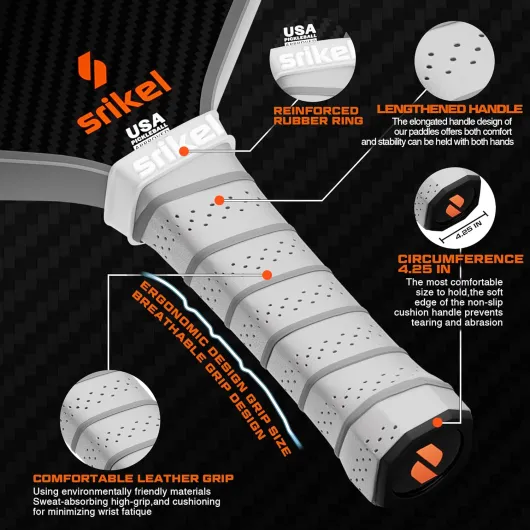
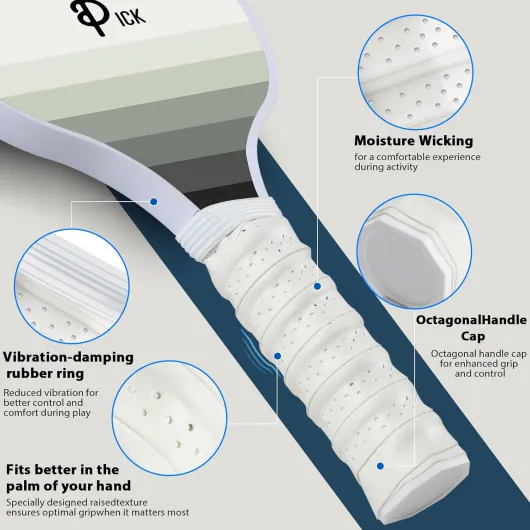
The grip shape is pretty neutral – not too square, not too round. The stock grip is okay but thin. With the included overgrip wrapped on, it actually felt much better to me: more cushioning and a diameter that fits average to slightly larger hands. Without the overgrip, I found myself squeezing a bit too hard, which isn’t great for touch shots. With it, I could relax my hand a bit and get better control.
On court, the design choice of a 16 mm core, carbon face, and slightly head-heavy balance is pretty clear: it’s aiming at that control-with-some-pop zone. You get a larger sweet spot and some forgiveness, but it’s not a soft, pillow-like paddle. Mis-hits near the edge are still playable, but you definitely feel when you’re off-center. So the design is not revolutionary, but it’s sensible for someone moving from cheap paddles into a more serious setup.
Comfort, grip, and fatigue over longer sessions
Comfort-wise, I’d put this paddle in the “good but not perfect” category. The weight at around 8 oz is pretty standard, but the slightly head-heavy balance does show up if you’re playing for more than two hours. During fast kitchen exchanges and when I was late on a few volleys, I noticed my wrist working a bit harder than with my more evenly balanced paddle. It’s not brutal, but if you’re sensitive to that or have wrist issues, it’s something to keep in mind.
The stock grip is serviceable but basic. It’s a bit on the thin side and not super cushioned. With just the stock grip, my hand felt a tiny bit cramped and I was gripping too tight, especially on backhands. Once I put the included overgrip on, it was a big improvement: better thickness, more tack, and less hand fatigue. I’d basically say the paddle is designed to be used with an overgrip for most adult hands, so plan on that from day one.
In terms of vibration and shock, the 16 mm core does a decent job. I didn’t feel any sharp sting on mishits, and my arm felt fine after back-to-back nights of play. It’s not as muted as some very soft-core paddles, but I actually like feeling some feedback from the ball. If you have serious tennis elbow, you might want something even softer, but for the average player, this is comfortable enough for regular use.
Overall, comfort is good for the price level: the paddle is light enough, the grip becomes decent with the overgrip, and the core keeps vibration under control. Just be aware of the slight head-heavy feel. If you’re used to lighter, evenly balanced paddles, give yourself a session or two to adapt, or consider adding a bit of grip weight or experimenting with lead tape if you really want to tweak the balance.
Carbon fiber, honeycomb core, and what that feels like
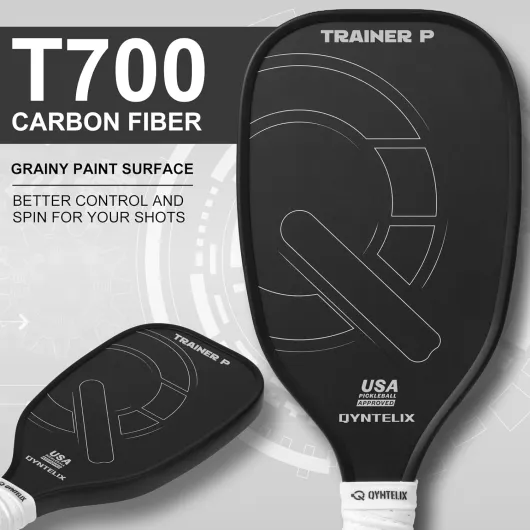
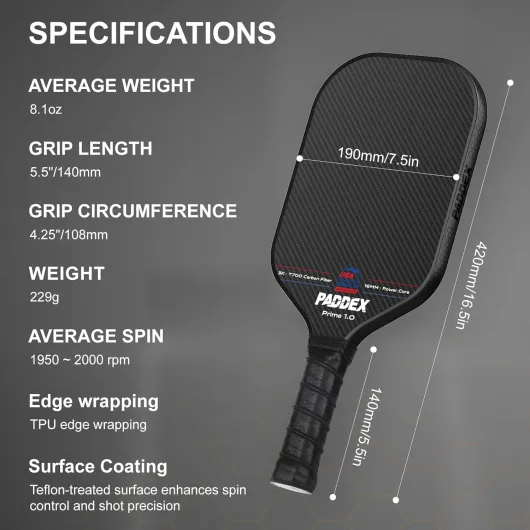
On paper, the materials sound fancy: T700 3K raw carbon fiber surface, 16 mm polypropylene honeycomb core, thermoformed construction, and a Teflon coating on top. In practice, here’s what that actually meant for me. Compared to my old fiberglass paddle, this one has a firmer, more connected feel on the ball. You don’t get that trampoline, bouncy sensation as much; instead, the ball feels like it stays on the paddle just a hair longer, which helps with control and spin.
The 16 mm PP honeycomb core does a decent job of absorbing shock. I’m not super sensitive to paddle vibration, but I’ve used some cheap paddles that buzz in your hand on hard hits. This PADDEX didn’t really do that. On drives and blocks, the impact feels controlled and not harsh. I wouldn’t call it super soft, but it avoids that stiff, dead feel that some budget carbon paddles have. People with mild elbow issues might still prefer a softer core, but for me it was fine over long sessions.
The textured carbon surface is the main upgrade over cheaper composite paddles. When you brush up on the ball for topspin or slice, you can feel the face gripping the ball better. It’s not night and day compared to a high-end raw carbon paddle, but it’s clearly ahead of smooth plastic-feeling faces. The Teflon coating is hard to judge directly, but the paddle surface didn’t show early wear or smooth spots after a few weeks, so durability seems alright so far.
For the price, the material package is pretty solid: proper carbon face, a modern 16 mm core, and a one-piece frame. It doesn’t feel like a toy, and nothing about it screamed “cheap” during use. Is it as dialed-in as a £150 paddle from a big name? No. But if you’re upgrading from Amazon starter sets, the materials alone make a noticeable difference in how the paddle plays.
Build quality and how it holds up
Durability is always tough to judge long-term, but after a few weeks of use and a bunch of court time, there are some early signs. The good news: the thermoformed frame feels solid. I didn’t see any separation at the edges, no weird flexing, and no rattles. I’ve accidentally clipped the ground and the net post a couple of times (as you do), and the edge didn’t chip or crack. Just the usual scuff marks you’d expect.
The carbon surface with the Teflon coating seems to hold up okay so far. After multiple sessions, the texture is still very much there, and I didn’t notice any obvious bald spots or smooth patches where the spin would drop off. The included clean eraser is actually handy – a quick rub to remove ball residue and dust brings back some bite. It’s not magic, but it helps keep the face consistent, especially if you’re playing with dirty outdoor balls.
The grip is probably the weak spot if you don’t use an overgrip. The stock wrap looks like the kind that can get slick and worn fairly quickly if you sweat a lot. Since they include an overgrip, I’d just put that on from day one and treat the stock grip as a base layer. The cover is decent quality and should help protect the paddle from dings in your bag, which definitely helps with long-term survival.
Based on the construction and how it’s handled some light abuse, I’d say durability is promising for this price level. Will it last as long as a premium $200 paddle used five times a week? Hard to say, but nothing about it feels fragile. For a regular recreational player or league player, I don’t see any red flags in the short term. If something’s going to go first, my guess would be grip wear or cosmetic scuffs, not structural failure.
On-court performance: power, control, and spin
On the court, this paddle sits in a nice middle ground between power and control. Drives and serves have decent pop, especially thanks to that slightly head-heavy balance. When I really swung through the ball, I could get good depth without feeling like I had to muscle it. It doesn’t hit as soft as some control paddles, but it also doesn’t feel like a pure power paddle that sprays balls long all the time. Once I adjusted, depth control was pretty consistent.
At the net, the story is similar. Dinks and resets are manageable, but you do need a bit of touch. The face is firm enough that if you’re heavy-handed, you’ll pop some balls up at first. After a couple of sessions, I found a groove with softer hands and could drop balls into the kitchen reliably. The 16 mm core and larger sweet spot help on slightly off-center contacts – you don’t get punished as hard as with thin, cheap paddles, but you still feel when you’re near the edge.
Spin is where the carbon face and texture actually show up. My topspin serves and roll volleys had noticeably more bite compared to my older smooth composite paddle. You can feel the ball grabbing on the surface when you brush up. Is it as spinny as the top-tier raw carbon paddles? Not quite, but it’s close enough that most intermediate players will be happy. One reviewer compared it directly to a Ronbus R3.16 and said the Ronbus felt slightly softer and more controlled; I’d agree that this PADDEX leans a bit more toward power and a firmer strike.
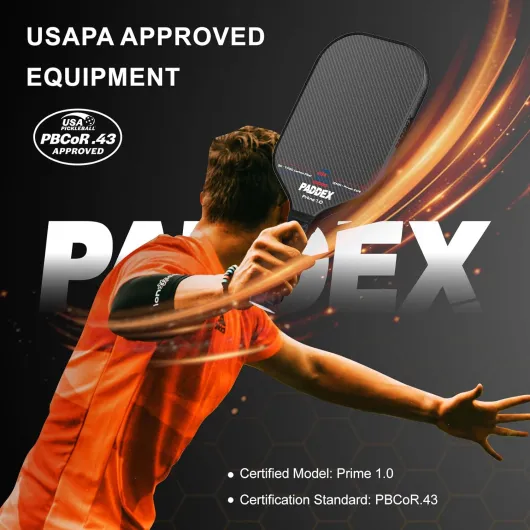
Overall consistency is good. The paddle is USAPA approved (PBCoR 0.43) now, so if you care about playing in tournaments, that box is checked. I never felt like the paddle was doing random things – if I missed, it was usually my footwork or timing, not the gear. For an intermediate player or a serious beginner stepping up from starter paddles, it’s a noticeable performance upgrade without paying top-shelf prices.
What you actually get in the box
Out of the box, the first impression is honestly better than I expected for the price. The paddle comes in foam inside a cardboard box, and inside you get: the paddle, a decent padded cover, an extra overgrip, and a little “clean eraser” block for the carbon face. It feels more like you bought from a proper brand than some random no-name Amazon special, at least on first contact.
The paddle itself is standard elongated shape: about 16.5 inches long and 7.5 inches wide, with a 16 mm core. Mine weighed in right around the advertised 8 oz (I have a basic kitchen scale, so not super precise, but it matched roughly what others reported). Handle size is listed as 4 1/4" and that feels right – on the thin side out of the box, which is fine if you like a smaller grip or plan to use the included overgrip.
The branding is pretty simple: all black, carbon look, no flashy graphics. Some people will like that it doesn’t scream for attention. Personally I don’t care as long as it plays well. The face has a noticeable texture when you run your fingers over it, more than cheap smooth paddles but a bit less bite than some high-end raw carbon paddles I’ve tried from friends. It does feel like a genuine carbon fiber face, not just a sticker.
Overall presentation: it feels like a mid-range paddle kit trying to give you everything you need in one go. The cover is actually useful and not flimsy, the extra grip is handy if you have bigger hands, and the eraser is a nice touch if you’re picky about keeping the hitting surface clean. Nothing fancy, but for the price point, the bundle makes sense and doesn’t feel like filler junk.
Pros
- Good spin and control for the price thanks to the textured carbon fiber face
- 16 mm honeycomb core and thermoformed build feel solid and reasonably forgiving
- Nice bundle with cover, overgrip, and eraser adds real value
Cons
- Slightly head-heavy balance may feel tiring or sluggish for some players
- Stock grip is thin and basic, basically requires using an overgrip
- Not as soft or finely tuned in feel as higher-end paddles from big brands
Conclusion
Editor's rating
Overall, the PADDEX carbon fiber pickleball paddle is a solid mid-range option that makes sense for intermediate players and ambitious beginners. It’s a clear step up from cheap starter paddles: better spin from the textured carbon face, a forgiving 16 mm core, and a build that actually feels sturdy. The bundle with cover, overgrip, and eraser is genuinely useful rather than just filler. For under £60, it offers good performance and doesn’t feel like a toy.
It’s not without flaws. The balance leans a bit head-heavy, which some players will like for power but others might find tiring or slightly sluggish at the net. The stock grip is thin and pretty average, so you basically want to use the included overgrip from day one. And if you’re already using high-end paddles from bigger brands, you’ll probably notice that those still have a bit more refined feel and control, especially on touch shots.
If you’re playing regularly, want more spin and consistency than your beginner paddle gives, and don’t want to spend a fortune, this is a good value, realistic upgrade. If you’re a serious competitor chasing every small edge and you’re willing to pay for it, you might want to skip this and go straight to a premium model. For most club-level players, though, it gets the job done well and leaves money in your pocket for balls and court fees.