Summary
Editor's rating
Value for money: fair price if you actually need the full kit
Retro look and rough face: not subtle, but practical
Comfort and grip: no hot spots, no slipping, just decent feel
Fiberglass face and 13 mm honeycomb core: standard entry-level build
Early durability: better than toy-level, still a budget build
On-court performance: good for beginners, decent for casuals
What you actually get in the Glarollirace set
Pros
- Comfortable grip and manageable weight, easy for beginners to handle
- Textured fiberglass face and 13 mm core give decent power and some spin
- Complete kit (2 paddles, 4 balls, bag) that’s actually playable and USAPA-approved
Cons
- Bag and balls are basic; real value is mostly in the paddles
- Less touch and control than mid-range carbon paddles
- Unknown brand, long-term durability still a question mark compared to established names
Specifications
View full product page →| Brand | Glarollirace |
| Age range | All |
| Color | Set of 2 Retro |
| Size | M |
| Frame material | Fibreglass |
| Material type | Fiberglass+PP honeycomb core |
| Skill level | All |
| Sport | Pickleball |
A budget pickleball kit I actually want to keep using
I picked up this Glarollirace pickleball set because I wanted a cheap way to get a couple of friends into the game without handing them my more expensive paddles. Unknown brand, loud retro design, and a price that’s clearly below the big names – I honestly expected something pretty average that I’d just keep as backups. After a few sessions (indoor sports hall and outdoor painted tennis courts), my opinion is a bit more nuanced.
The short version: it’s better than a random Amazon no-name set, but it’s not at the level of mid-range carbon paddles. Which is fine, because it’s not priced like those either. The important thing for me was: are they comfortable, do they feel consistent, and can beginners pick them up without struggling? On those points, they do the job.
I used them for a couple of evenings with complete beginners and then for some more serious games with players who usually use branded paddles. Nobody complained about the weight or grip, and a couple of people actually preferred the slightly rough face for spin. That’s a good sign for a “starter” kit. There are still a few compromises though: the bag is basic, the balls are just okay, and if you already play a lot, you’ll feel the difference compared to a more premium paddle.
So this review is from that angle: as an everyday player who owns nicer paddles, is this a solid second set and a good starter kit, or just another cheap bundle? I’ll go through design, materials, comfort, performance, durability and value, and I’ll be blunt where it falls short.
Value for money: fair price if you actually need the full kit
Price-wise, this set usually sits in that mid-budget Amazon range. You’re getting 2 paddles, 4 balls and a bag. If you break it down, the real value is in the paddles. Forget the marketing talk – the important thing is: do these feel like you overpaid, or like you got a fair deal? For me, it’s closer to the second option.
Compared to true bargain-bin sets where you get flimsy paddles and awful balls for a bit less money, this feels like a step up: USAPA-approved, decent construction, and actually playable performance. On the other hand, compared to established brands’ entry paddles, you’re saving some cash but losing out on brand support and long-term reputation. That’s the trade-off: you pay less, but you’re trusting a lesser-known name.
I’d say the value is best if you’re in one of these situations:
- You’re new to pickleball and want a complete kit for you and a partner without doing tons of research.
- You already play but want a spare set for friends or family so they don’t use your pricier paddles.
- You like the idea of a USAPA-approved paddle without paying for a big brand logo.
If you’re already serious about the sport and know you like a certain weight, thickness, or carbon face, you might be better off putting the same money towards one better paddle instead of this bundle. But for its target audience – beginners and casual players – the price-to-performance ratio is pretty solid. No, it’s not the deal of the century, but you’re not throwing money away either. It’s a sensible purchase if you match the use case.
Retro look and rough face: not subtle, but practical
Design-wise, the first thing you notice is the retro graphics. They’re bright and a bit 70s. Personally, I don’t really care what my paddle looks like as long as it plays well, but a couple of people I played with liked that each paddle has a distinct color – it makes it easier to tell who’s using which one during doubles. If you hate loud colors, this might annoy you, but it’s not offensive, just a bit loud.
The paddle shape is a standard wide-body profile. That means a decent sweet spot and a forgiving feel for beginners. Edge guard is a simple TPU band around the paddle. I did clip the ground and the net post a couple of times (as you do when you’re reaching for low shots), and the guard took the hit without any visible chips or cracks. So from a pure design perspective, it’s what you want for a starter paddle: nothing fancy, just a normal shape that doesn’t get in your way.
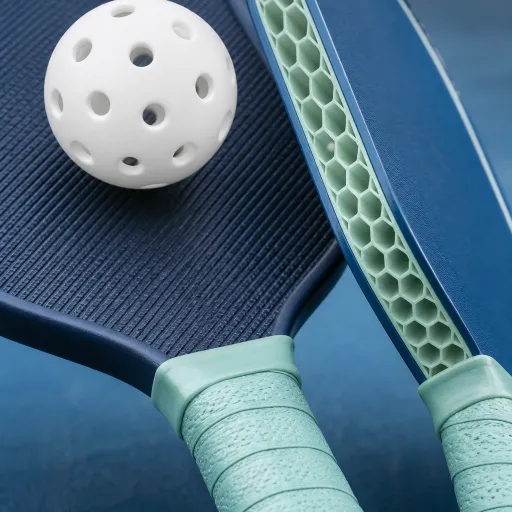
One interesting design choice is the matte, slightly rough surface. Most entry-level fiberglass paddles I’ve used were pretty smooth, which makes spin a bit harder to generate. Here, you can actually feel a slight texture if you rub your fingers over the face. On court, that translated to noticeably easier topspin and slice compared to the smoother cheap sets I’ve tried. It’s not magic, but when I switched back and forth with a smooth-face paddle, my spin serves and roll volleys clearly bit more with the Glarollirace.
Overall, the design is functional and a bit flashy, but not in a premium way. It looks like a mid-range Amazon paddle: decent print, no visible bubbles, edges finished cleanly. If you’re expecting minimalist, sleek gear, this is not it. If you just want something that looks fun and is easy to spot in a pile of paddles, it does the job just fine.
Comfort and grip: no hot spots, no slipping, just decent feel
Comfort is usually where cheaper sets cut corners, especially on the handle and grip. Here, I was pleasantly surprised. The grip is around 4 1/4" and slightly cushioned. I played a couple of 90-minute sessions, and I didn’t get any blisters or hot spots on my palm or fingers. For context, I’ve had blisters show up quickly with some really cheap Amazon paddles where the grip tape was hard and poorly finished at the edges.
The handle length is pretty standard – enough room for a full one-handed grip with a little space at the top. I tried a two-handed backhand just to see, and while it’s not as comfy as a paddle specifically designed for that, it’s still doable. One of my friends with smaller hands actually commented that it felt more comfortable than my thicker-grip paddle, so if you’re not sure about grip size, this middle size is a safe bet.
In terms of weight and swing, the 8–8.5 oz range feels about right. You don’t get that wrist fatigue you sometimes feel with heavier paddles, especially when you’re learning and over-swinging a bit. After a couple of sessions, my arm felt fine, and I didn’t notice any weird vibration spikes on off-center hits. There is some vibration – it’s still a 13 mm fiberglass paddle – but nothing that made me want to put it down. Impact feels consistent across most of the face, with the usual drop-off right near the edges.
Grip texture is soft and breathable enough. Indoors, when sweat kicked in, I didn’t feel like the paddle was trying to fly out of my hand. I didn’t have to re-grip constantly between points, which I’ve had to do with slicker handles. Could the grip be a bit more premium? Sure. But for a stock grip on a budget paddle, it’s honestly fine. If you’re picky, you can always overgrip it later. Out of the box, it’s comfortable and gets the job done without any major complaints.
Fiberglass face and 13 mm honeycomb core: standard entry-level build
The paddle is built with a fiberglass surface and a 13 mm polypropylene honeycomb core. That combo is very common in budget and mid-level paddles, and it’s what I expected at this price. Fiberglass generally gives a bit more pop than control-focused carbon fiber, and the thinner 13 mm core adds even more power but slightly less touch. For casual players, that’s often actually easier – the paddle does some of the work for you.
In hand, the materials feel pretty solid for the price. No weird rattling, no hollow clunk when you hit the ball. I checked around the edges and the face when it arrived: the lamination looked even, no obvious glue blobs, and the edge guard was seated properly all the way around. After a few sessions and a couple of ground scrapes, nothing started peeling or buzzing, which is often the first sign of a cheap build.
The grip material is a soft, perforated synthetic. It’s cushioned enough that you don’t feel the handle corners digging into your palm, even after a longer session. It’s not as nice as the grips on more expensive paddles, but for a stock grip it’s actually decent. My hands did get a bit sweaty in an indoor gym, and the grip stayed tacky enough – I didn’t feel it slipping around, which is important if you’re just learning and your technique isn’t perfect.
Of course, there’s no carbon fiber or fancy foam-filling here, so if you’re coming from a higher-end paddle, you will feel the difference. The feedback is a bit more pingy, and the sweet spot isn’t as forgiving as something twice the price. But for beginners and casual players, the materials are good enough to learn proper shots without feeling like you’re hitting with a flimsy toy. For an unknown brand, I was honestly expecting worse, so on the material front, it’s a solid showing.
Early durability: better than toy-level, still a budget build
I haven’t had this set for months, so I can’t pretend I know how it holds up after a full season, but I did pay attention to early wear and tear. Over a few sessions, the paddles took some normal abuse: a couple of ground scrapes, clashes with another paddle at the net, and some outdoor use where sand and dust always find a way onto the court. So far, the edge guard is still tight, and there are no cracks or chips in the face.
The graphics and surface haven’t started peeling or bubbling, which I’ve seen on lower-quality paddles after only a few uses. The matte texture is still there; it didn’t smooth out or get shiny in the sweet spot yet. That’s a good sign for the coating they used. The grip tape stayed in place too – no unraveling at the top or bottom, and no obvious flattening after a few longer sessions. If you play very often, you’ll probably re-grip at some point anyway, but out of the box it’s holding up.
The balls are the weak link in terms of durability. They’re fine for casual play, but they feel generic, and I wouldn’t be surprised if they go soft or crack faster than better-known brands. After my tests, they were still usable, but I wouldn’t rely on them for regular club play. For a bundled set, that’s pretty standard: the balls are more of a starter bonus than a long-term solution.
The bag is thin and unpadded, so don’t expect it to protect your paddles from serious impacts. But for just carrying the set from home to the court and back, it’s okay. Stitching and zip held up fine with normal use. Overall, durability so far feels above the usual cheap Amazon kit, but still clearly in the budget category. I’m not worried it’ll fall apart in a month, but if you play several times a week, you might eventually want to upgrade, especially if you’re rough on your gear.
On-court performance: good for beginners, decent for casuals
I tested the paddles both outdoor (painted tennis courts, light wind) and indoor (sports hall). For power, the fiberglass face plus 13 mm core give a nice pop. Beginners in our group had no trouble getting the ball over the net, even with shorter swings. Compared to my more control-focused carbon paddle, drives came off a bit hotter with less effort, which for newer players is actually helpful. You do lose some precision on delicate dinks, but that’s expected at this thickness and material.
The sweet spot is reasonably large for a wide-body paddle. Mishits near the top and sides still made it over the net most of the time, just with a bit less control. When I switched back and forth with a more expensive paddle, I noticed that really accurate placement at the kitchen line was easier with the nicer paddle, but for casual games and learning, the Glarollirace was completely fine. It’s forgiving enough that you’re not punished for every small mistake, which keeps beginners from getting frustrated.
The rough matte surface is probably the most interesting performance feature here. Serves with topspin and slices on returns definitely grabbed the ball more than on my smoother fiberglass backup paddle. I could hit spin serves that kicked up a bit more, and slices stayed lower. It’s not night-and-day, but it’s noticeable. If you’re just starting to work on spin, this surface actually helps you feel the difference without needing a high-end carbon face.
Noise and feel are both typical fiberglass. There’s a clear pop sound but nothing too loud or annoying. Impact feel is slightly firm, not super plush, but I never felt any harsh shock. For USAPA-approved paddles at this price, the performance is honestly pretty solid: more than enough for beginners and casual weekly players. If you’re already playing at a higher level and want top-tier control and touch, you’ll eventually outgrow it, but as a first or second paddle, it holds up better than I expected.
What you actually get in the Glarollirace set
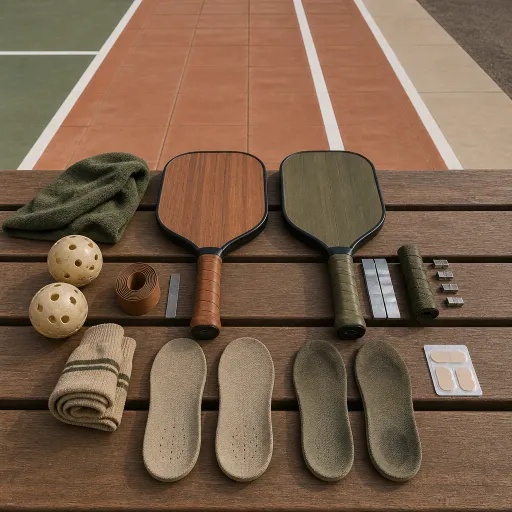
In the box, you get 2 fiberglass paddles, 4 balls (2 indoor with 26 holes, 2 outdoor with 40 holes) and 1 soft bag to carry everything. I tested the "Set of 2 Retro" colorway, which has that 70s-style graphic. It’s a full kit, so if you’re starting from zero, you really can just grab this and go straight to the court without buying anything else. That’s basically why I went for it.
The paddles themselves are standard size and shape – nothing weird there. Grip size is around 4 1/4", which for me (average male hand) is comfortable. Two of my friends with smaller hands (one woman, one teenager) also managed fine, so it’s kind of a safe middle ground. Each paddle is listed at 8–8.5 oz, and on court they felt right in that range – light enough that your arm doesn’t die, but not so light that you lose all power.
The bag has a single main compartment that fits the two paddles and the four balls easily, plus a small inner zip pocket where you can throw keys and a phone. Don’t expect any padding or fancy structure – it’s basically a nylon sack with a strap, but it does what it’s supposed to do. Zips worked fine and didn’t snag while I used it.
So in practice, the “set” part is decent: paddles are the main value, balls are usable but generic, and the bag is functional but basic. If you already have decent balls and a backpack, the extras won’t blow your mind, but as a complete starter pack it’s actually pretty convenient. Nothing feels luxury, but nothing screams toy-store junk either, which is usually my fear at this price.
Pros
- Comfortable grip and manageable weight, easy for beginners to handle
- Textured fiberglass face and 13 mm core give decent power and some spin
- Complete kit (2 paddles, 4 balls, bag) that’s actually playable and USAPA-approved
Cons
- Bag and balls are basic; real value is mostly in the paddles
- Less touch and control than mid-range carbon paddles
- Unknown brand, long-term durability still a question mark compared to established names
Conclusion
Editor's rating
After a few sessions with the Glarollirace set, my honest take is this: it’s a solid beginner and casual kit, not a high-end bargain. The paddles feel decent in hand, the grip is comfortable, the weight is manageable, and the textured face actually helps with spin more than the usual smooth cheap paddles. Build quality is better than the really low-end stuff, and the USAPA approval is a nice reassurance that it’s not total junk.
On the downside, you do feel the budget nature in a few places: the bag is basic, the balls are just okay, and if you’re used to more premium paddles, you’ll miss the extra control and softer feel. This isn’t the set you buy if you’re already deep into pickleball and chasing performance. It’s the set you buy to get started without overthinking, or to have two extra paddles around for friends so you don’t hand them your expensive gear.
If you’re new to the sport, play once or twice a week, or need a backup/guest set, this is good value for money and perfectly usable. If you’re already playing at a higher level and care a lot about touch at the kitchen and ultra-precise placement, skip this and invest in a single better paddle instead. For what it is – an unknown-brand Amazon kit – it does its job and doesn’t feel like a waste of cash.