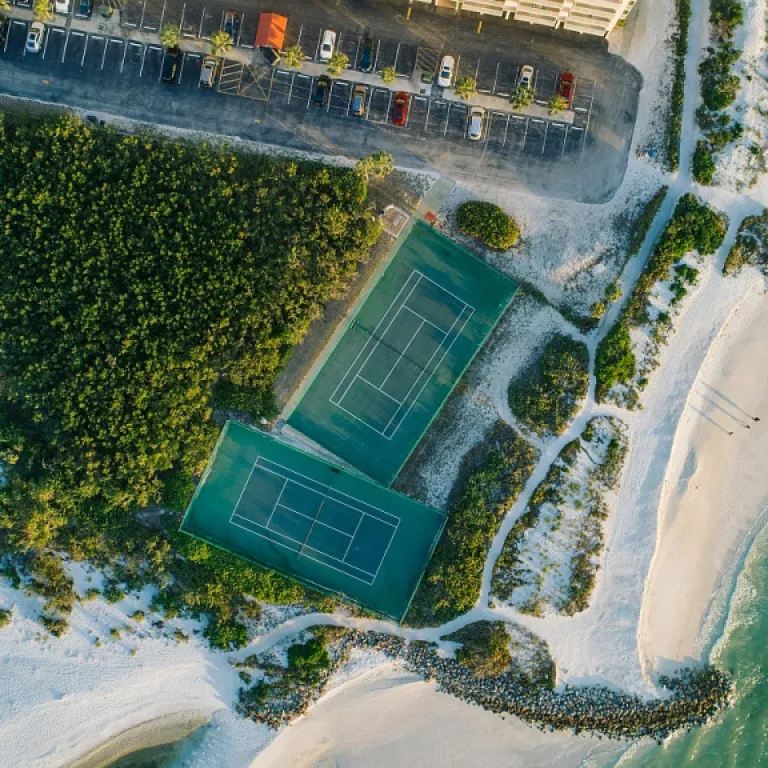
Standard dimensions of a pickleball court
Key Measurements Every Player Should Know
When considering building a pickleball court or simply understanding the sport, knowing the official court dimensions is essential. According to USA Pickleball, the standard pickleball court measures 20 feet wide by 44 feet long. These dimensions are the same for both singles and doubles play, making it easy for players to transition between formats. The total surface area required for the court itself is 880 square feet.
- Net Height: The court net is set at 36 inches high at the sidelines and 34 inches high at the center. This lower net compared to tennis courts is a defining feature of pickleball.
- Non-Volley Zone: Also called the "kitchen," this area extends 7 feet from the net on both sides. Players must be aware of this space during play, as it impacts strategy and movement.
- Baselines and Sidelines: The baselines run parallel to the net at each end of the court, while sidelines mark the width. Accurate court dimensions are crucial for fair play and safety.
When planning for a court surface, it’s important to consider the type of surfacing—concrete and asphalt are common choices for durability and consistent ball bounce. Proper court lighting and fencing are also recommended, especially for community or club setups, to ensure safe and enjoyable play at all hours.
For those interested in seeing real-world examples of well-designed pickleball courts, check out this guide to pickleball courts at Cole Park. It provides insights into court building, surface area, and amenities like shade structures that enhance the playing experience.
Understanding these dimensions is the foundation for comparing pickleball courts to other sports areas, planning your own space, and ensuring every game is played on a regulation surface.
Comparing pickleball court size to other sports courts
How Pickleball Court Dimensions Stack Up Against Other Sports
When looking at the size of a pickleball court, it helps to compare it with other popular sports courts. This gives players and anyone interested in building pickleball courts a clearer idea of the space required and how it fits into existing recreational areas.
- Pickleball court: The standard dimensions are 20 feet wide by 44 feet long. This includes both singles and doubles play. The net stands 36 inches high at the sidelines and 34 inches high in the center. The total surface area is 880 square feet.
- Tennis court: A full-size tennis court is much larger, measuring 36 feet wide by 78 feet long for doubles play. That’s a surface area of 2,808 square feet—over three times the size of a pickleball court. The net is 42 inches high at the posts and 36 inches at the center.
- Badminton court: A standard badminton court is 20 feet wide by 44 feet long, almost identical in size to a pickleball court. However, the net is higher, at 60 inches in the center.
- Basketball court: A typical high school basketball court is 50 feet wide by 84 feet long, with a surface area of 4,200 square feet. This is far larger than a pickleball court, making basketball courts less practical for conversion.
Because pickleball courts are smaller, it’s common to see multiple pickleball courts lined out on a single tennis court surface. This flexibility makes pickleball accessible in many community and recreational spaces. For those interested in adapting tennis courts for pickleball, how to play pickleball on a tennis court offers practical guidance on court building, surfacing, and net adjustments.
When planning for lighting, fencing, and shade structures, remember that the smaller area of a pickleball court means these features can be more cost-effective compared to tennis courts. The surface area also impacts the choice of court surface, whether it’s concrete, asphalt, or another material. Understanding these differences in court dimensions helps ensure the right space and features for enjoyable play and proper ball bounce.
Space requirements for home and community setups
How Much Room Do You Really Need for a Pickleball Court?
When planning to build a pickleball court at home or in a community setting, understanding the space requirements is crucial. The official court dimensions, as set by USA Pickleball, are 20 feet wide by 44 feet long for the playing area. However, you’ll need more than just the court surface to ensure a safe and enjoyable play experience.
- Playing Area: The minimum recommended total area is 30 feet wide by 60 feet long. This extra space around the court net and sidelines allows players to move freely and safely.
- Surface: Concrete is the most common surface for outdoor courts, but asphalt and sport surfacing are also popular. The surface area should be level and free of cracks to ensure consistent ball bounce and player safety.
- Lighting: For evening play, proper lighting is essential. Fixtures should be positioned to minimize shadows and glare on the court surface.
- Fencing: Fencing around the court, typically 10 feet high, helps keep the ball in play and separates courts if you have more than one. Shade structures are also a smart addition for player comfort.
For those with limited space, it’s possible to adapt existing areas, such as a driveway or a portion of a tennis court, but always ensure the minimum recommended dimensions for safety. Community setups often include multiple pickleball courts side by side, with shared fencing and lighting to maximize the use of available area.
Before starting your court building project, consider the number of players, the court surface, and whether you’ll need additional features like lighting or shade. If you’re looking for ways to save on equipment, check out this guide on finding the best Paddletek discount code for your pickleball gear.
| Feature | Minimum Requirement | Recommended for Comfort |
|---|---|---|
| Court Dimensions | 20 x 44 feet | 20 x 44 feet |
| Total Area | 30 x 60 feet | 34 x 64 feet |
| Net Height | 36 inches at sidelines, 34 inches at center | 36 inches at sidelines, 34 inches at center |
| Fencing Height | 10 feet | 10-12 feet |
| Lighting | Optional | Recommended for evening play |
Proper planning for your pickleball court ensures a better playing experience and helps avoid costly mistakes during court building. Whether you’re adapting a tennis court or starting from scratch, always account for the full surface area, fencing, and amenities to create a welcoming space for all players.
Why court size matters for gameplay
The impact of court dimensions on pickleball play
The official dimensions of a pickleball court—20 feet wide by 44 feet long—are not just arbitrary numbers. These measurements directly influence how the game is played, from the speed of rallies to the strategies players use. The size of the court ensures that both singles and doubles matches are competitive and accessible, allowing players of different skill levels to enjoy the sport.
Movement, spacing, and player experience
With a court surface area of 880 square feet, players have enough space to move quickly, react to the ball, and cover their side of the net. The relatively compact dimensions compared to a tennis court mean that players do not need to cover as much ground, making pickleball more approachable for a wider age range. The net, set at 36 inches high at the sidelines and 34 inches at the center, also shapes the style of play, encouraging volleys and quick exchanges at the net.
- Surface and surfacing: The quality and type of court surface—whether concrete, asphalt, or a cushioned material—affect ball bounce and player movement. Proper surfacing helps prevent injuries and ensures consistent play.
- Lighting and fencing: Adequate lighting is essential for evening games, while fencing keeps balls within the playing area and enhances safety. Both elements should be considered when building pickleball courts, especially in community or shared spaces.
- Shade structures: In outdoor settings, shade structures improve player comfort and extend playing time during hot weather.
Why getting the dimensions right matters
Accurate court dimensions are crucial for fair play and to meet USA Pickleball standards. If the area is too small, players may feel cramped, leading to more faults and less enjoyable rallies. Too large, and the game loses its fast-paced, social nature. When building pickleball courts, measuring the court feet precisely ensures the intended experience for all players.
Whether you are adapting a tennis court for pickleball or constructing a new court from scratch, attention to the correct dimensions, net height, and surface area will help maintain the integrity of the sport and provide the best possible playing environment.
Adapting spaces for pickleball
Creative Solutions for Limited Spaces
Not every location has the luxury of a full-size area dedicated to pickleball. Many players and communities look for ways to adapt existing spaces, like driveways, unused tennis courts, or gymnasiums, to fit the standard pickleball court dimensions. The official court measures 20 feet wide by 44 feet long, but sometimes you have to work with what you have. Portable nets, temporary lines, and multi-use surfacing can make almost any flat, hard surface playable for pickleball, as long as you pay attention to the minimum space needed for safe movement around the court.
Key Features to Consider When Repurposing Areas
- Surface: The court surface should be smooth and level. Concrete or asphalt is common, but proper surfacing helps with ball bounce and player safety.
- Net Height: The net should be 36 inches high at the sidelines and 34 inches at the center. Portable nets are a practical solution for temporary setups.
- Lighting: Good lighting is essential for evening play. LED fixtures designed for sports courts provide even coverage and reduce shadows.
- Fencing: Fencing or barriers help keep the ball within the play area and protect spectators. Chain-link fencing is often used for outdoor courts.
- Shade Structures: If you’re building pickleball courts outdoors, consider adding shade structures for player comfort during hot weather.
Converting Tennis Courts and Other Spaces
One of the most popular ways to create pickleball courts is by converting existing tennis courts. A standard tennis court is much larger than a pickleball court, so you can fit multiple pickleball courts within the same area. This approach maximizes the use of available space and allows more players to enjoy the game simultaneously. When planning a conversion, pay close attention to the court dimensions and ensure the net height and surface area meet USA Pickleball guidelines.
Practical Tips for Home and Community Court Building
- Measure your available space carefully before marking lines or installing a net.
- Allow extra feet around the court for player movement and safety.
- Choose surfacing materials that provide good traction and consistent ball bounce.
- Plan for proper drainage if building outdoors to prevent water pooling on the court surface.
Adapting spaces for pickleball is about balancing the official dimensions with the realities of your available area. Whether you’re working with a tennis court, a gym, or a backyard, thoughtful planning ensures a fun and safe playing experience for all players.
Common mistakes when measuring for a pickleball court
Overlooking Perimeter and Safety Space
One of the most frequent mistakes when measuring for a pickleball court is focusing only on the court dimensions—20 feet wide by 44 feet long—without considering the extra area needed around the court. Players need room to move safely beyond the court lines. USA Pickleball recommends at least 10 feet of clear space behind each baseline and 6 feet on each sideline. Skipping this step can lead to cramped play and even injuries.Confusing Tennis and Pickleball Court Measurements
It’s easy to mix up the dimensions of a tennis court with those of a pickleball court. Tennis courts are much larger, and simply taping off a section of a tennis court for pickleball can result in incorrect court feet and net placement. Always double-check the specific measurements for pickleball: 20 feet wide, 44 feet long, with a net 36 inches high at the sidelines and 34 inches high in the center.Ignoring Surface and Slope Requirements
The court surface is crucial for safe and consistent play. Some builders overlook the need for a level, non-slip surface area, or use unsuitable materials. Concrete is common, but it must be finished properly and sloped for drainage—typically 1% slope, or about 1/8 inch per foot. Poor surfacing can cause water pooling and uneven ball bounce.Not Planning for Fencing, Lighting, and Shade
When building pickleball courts, it’s important to account for fencing, lighting, and shade structures in your measurements. Fencing should be set back from the court area to avoid interfering with play. Lighting poles and shade structures also need to be placed outside the active play zone. Overlooking these elements can reduce the usable court area and impact player safety.Misjudging Multi-Court Setups
For those planning multiple pickleball courts or converting tennis courts, it’s common to underestimate the total space required. Each court needs its own buffer zone, and shared fencing or lighting must be positioned to serve all courts without obstructing play. Careful planning ensures each court meets standard dimensions and provides enough space for all players.- Always measure the entire area, not just the court lines.
- Check the height and placement of the net.
- Consider the court surface and drainage needs.
- Plan for fencing, lighting, and shade structures outside the play area.
- For multiple courts, allow for buffer zones between courts.